Herbal Formulas - Strength in Numbers
When most people first venture into the world of herbal medicine, they look up herbs in a book and consider taking one that’s good for whatever ails them. We tend to think of single herbs as being the correct foray in to working with medicinal herbs because most of our experience of modern medicine is in the form of one remedy for one disease. It can be surprising to find out, however, that most herbal traditions and most all clinical herbalists work with complex and nuanced formulas containing several herbs rather than relying on one herb alone. The reasons behind this are fascinating, and when we understand just how much intention and power is in a formula, we can appreciate the process even more.
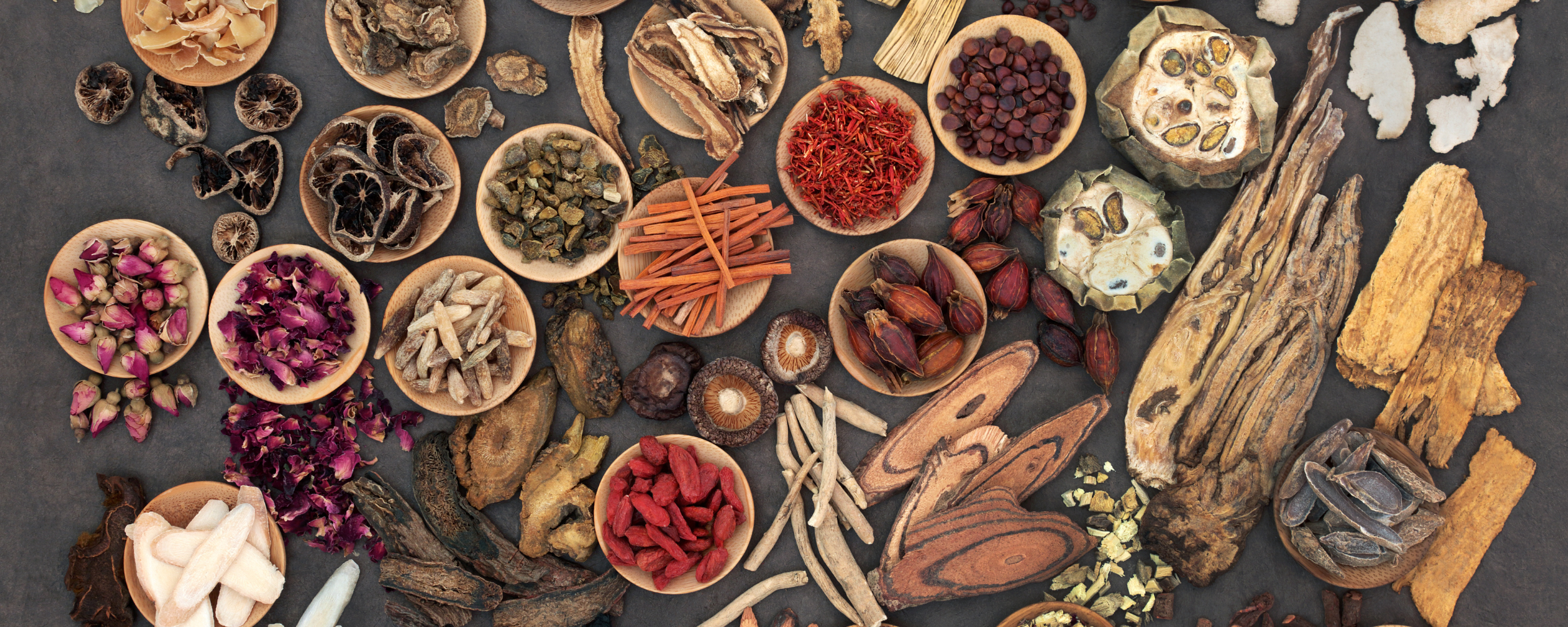
Some of the Chinese, Ayurvedic, and Western herbs we work with our herbal clinic
Our conversation begins with the concept of synergy. This term comes from the Greek syn- meaning ‘work’ and 'ergon’ meaning ‘together’. Synergy explains how various parts of a system, network, or ecology work together to create one harmonious whole.
Individual herbs are synergistic in really beautiful ways. The many constituents of a plant work together to create the medicine that a plant shares with us, and when even one piece of the community is taken away, we find the herb no longer works as well as they used to. A great example of this is with Turmeric (Curcuma longa) root. When supplement manufacturers isolate the chemical constituent curcuma from Turmeric, they provide us with a less effective version of the medicine that has side effects we will never see when we take the whole root. We need the whole story to really benefit from what’s being shared, not just the punchline.
Side note: Curcumin extract is not herbal medicine, it is phytopharmacology and it disconnected from the deep heart of traditional herbal medicine. The whole root is herbal medicine and brings both the physical and the spiritual presence of the plant to our world in a way that’s truly respectful.
Synergy is mirrored in the way we write and create herbal formulations, too. We consider that a formulation must be in harmony- each herb supporting, aligning, and easing the other herbs. This is the part of herbal medicine formulation that I find most fascinating, so let’s look at a little bit of it now.
The Effect of an Herbal Formula
When a group of herbs which are each aligned to the individual’s constitution, speak to their unique pattern of disharmony, work well with one another, and move in the same energetic direction are combined, we find their effects become many times greater and deeper than any of them offer individually. This kind of formulation is the basis of exceptional herbalism- and it’s the one in which we see the greatest effect.
Taking just one herb for a situation puts a big expectation on a single ally- and if there are any ways in which that ally don’t align to the individual or the patterns, we can actually see those issues exacerbate. Similarly, a formula that contains herbs that aren’t in harmony with the person or the goal can deepen the issue, do nothing, or cause it to move to another part of the body/mind.
A great formula, no matter how many herbs it contains, becomes far greater than the sum of its parts. A three-herb formula, for example, creates a dynamic combination of plants that each have their own virtues while overlapping in a common goal. This overlap allows each plant individually and the total ecology of the formula to go further for the person than any of them could do alone.
The Harmony of an Herbal Formula
Even our most gentle herbs have their jagged edges. Formulation allows us to intentionally soften, ease, and direct a grouping of herbs to help increase efficacy, support the body during assimilation, and avoiding reactions.
Various herbs can be called into a formula to help drive that formula into a specific part or function of the body/mind, alleviate a possible aggravation between the formula and the individual, make strong herbs less intense, gentler herbs louder, or even support the digestive system in absorbing and assimilating complex herbs more efficiently.
I like to think of good herbal formulas like a small group of humans in a very small space. How will they get on with one another? Do they all have a shared interested they can focus their energy on? If two of them have some difference in opinions, how can we soften and ease that difference so there is an agreeable nature in the disagreement?
All of this is part of our consideration when bringing two of more herbs together.
The Attending of an Herbal Formula
Exceptional formulations address both the pattern being addressed and the individual experiencing the pattern- one formula can affirm our sacred center while supporting us in deep healing.
We tend to think of herbal medicine as something that addresses an illness. This can be the case, but it’s not the approach of ancient herbal traditions. Instead, we consider that the herbs address the individual person and support the intelligence of their body/mind in true healing.
This means that our formulations are not necessarily just focused on what’s wrong. We often include herbs that attend to what’s right! For example, in an herbal consultation I may connect with an herb that is deeply aligned with the spirit of a client. I will bring this herb into a formula to act as an anchor for the work- a plant that reflects the person’s best version of self back to them so that the healing can unfold in confidence and rooted power.
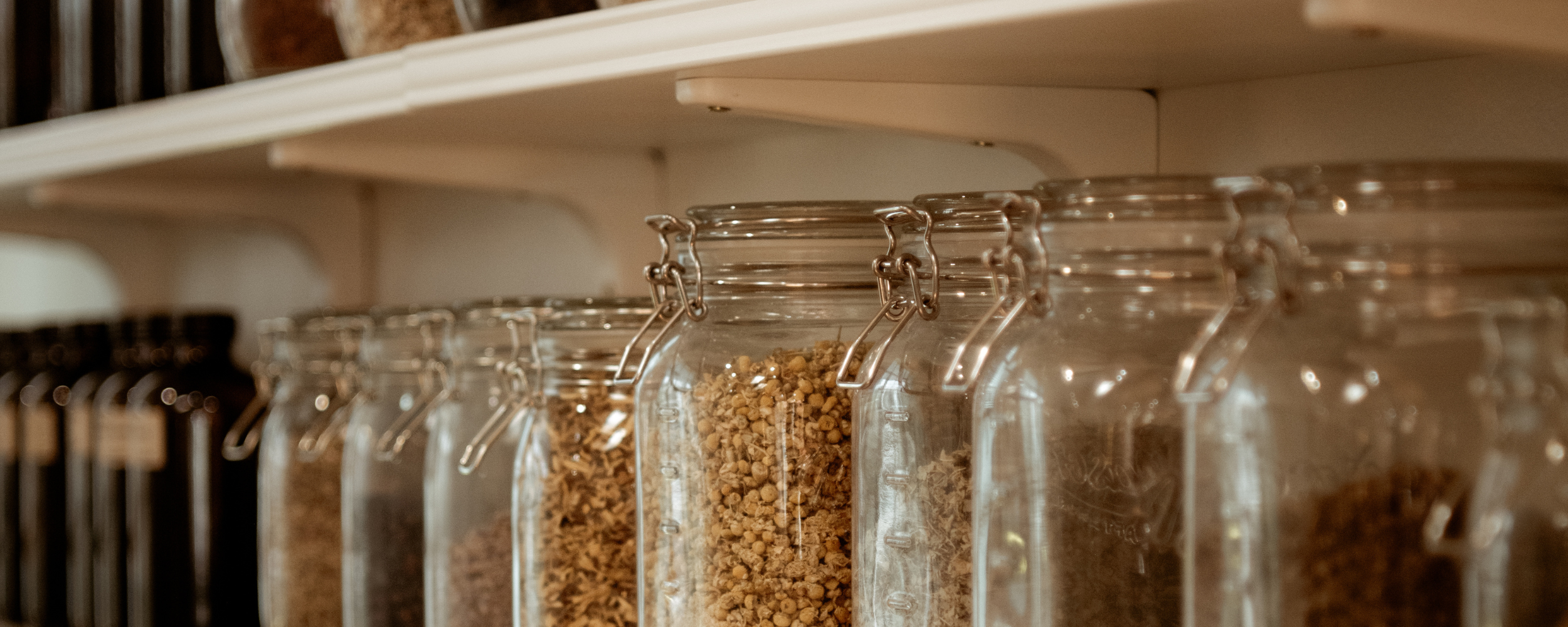
Handcrafted herbal extracts and vibrant organic herbs on the wall of our herbal apothecary in Salt Lake City, Utah
It Takes Two : The Fascinating Way of Dui Yao Formulas
Before we wrap up our brief look at herbal formulations, I want to share something with you about one of my favorite formulating methods hailing from the profound Taoist traditions of Traditional Chinese Medicine.
There is a particular kind of magic woven into Chinese herbal medicine, and it lives in a practice called dui yao. The phrase translates roughly as ‘paired herbs’, and at first glance the idea sounds simple enough. Two plants placed together in a formula. What makes dui yao so extraordinary is what happens when those two plants meet on the page and in the body, because they are never chosen at random. They are paired with the precision of an old craftsman fitting two pieces of wood together, and the partnership that emerges is something neither herb could accomplish alone.
The herbalists of ancient China observed something that takes Western pharmacology a long time to catch up to. Plants do not act as single ingredients. They influence each other. One herb can amplify another, or temper it, or guide it to a specific part of the body, or transform its character entirely. A warming herb paired with a cooling one creates a balanced action that neither extreme would produce. A bitter herb paired with a sweet one becomes more digestible to the body, more graceful in its movement. A herb that runs deep can be paired with a herb that runs to the surface, and together they cover the whole territory. Some pairs sharpen each other like steel on stone. Others soften each other like water shaping clay.
What makes this so beautiful, and so rare in the modern world of single ingredient supplements, is the recognition that medicine is a conversation. The plants in a dui yao pairing speak to each other. They negotiate. They balance. They divide the work. And the body, which is itself a vast and intricate conversation between systems, recognizes this kind of medicine the way it might recognize an old language. There is no shouting, no force. Just the quiet intelligence of two plants working together, each one made more itself by the presence of the other. After thousands of years of careful observation, the masters of Chinese herbalism left us a vocabulary of these pairings, and each one is a small marvel of human attention to the green world.
I often work with dui yao formulations for folks dealing with intense levels of acute stress, anxiety, and strain. The simple nature of two herbs gives the body less to process, while the nuance of the dui yao approach ensures we give the individual the support they deserve.