How chronic stress, anxiety, and worry create real physical tension and pain, how the mind and body feed each other, and how personalized herbal care paired with simple daily practices meets both at once, from a clinical nervous system herbalist in Salt Lake City
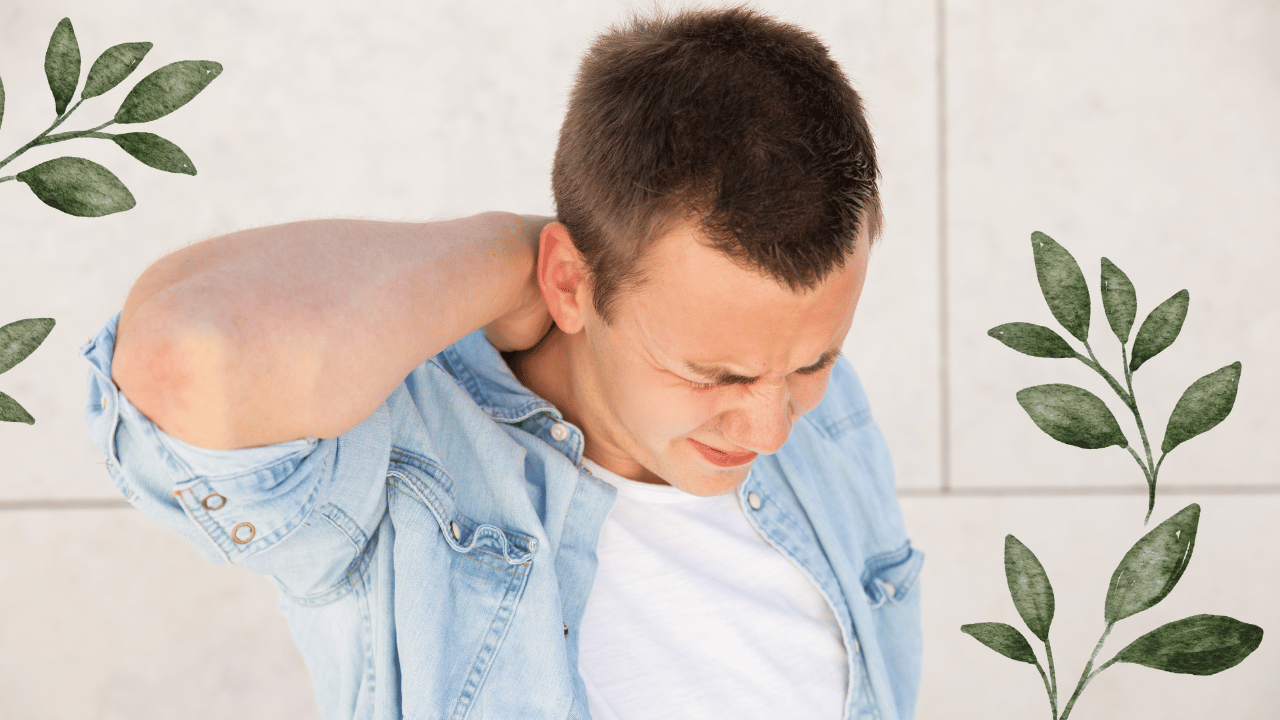
If you’ve been living with chronic muscle tightness, nagging physical tension, limited range of motion, or chronic pain that never fully resolves, I want to invite you to look at what might be feeding it from a different angle. Not from the perspective of structural problems alone, though structural issues are real. From the perspective of what chronic stress, anxiety, and worry are quietly doing to your physical body, day after day, year after year.
In my clinical herbal practice here in Salt Lake City, I see this pattern constantly. People come in carrying tight shoulders, locked necks, aching lower backs, stiff hips, jaw tension that produces headaches, and ranges of motion that have gradually diminished over years. They’ve often been told these are structural or postural issues. Sometimes they are. But very often, there’s a nervous system story running underneath that no one’s addressed, and until that story gets met, the physical tension keeps returning no matter how much stretching, massage, or physical therapy a person does.
Let me walk you through what’s really happening in the body of someone carrying chronic mental and emotional stress, how the mind and body feed each other in this landscape, how herbal medicine can genuinely help, and a few simple techniques from the American Institute of Stress, where I received my clinical coaching training, that you can begin using today.
The Mind and Body Are Not Separate
Let’s start with the honest physiological picture, because once you understand this, a lot of patterns in your own body will suddenly make more sense.
When your nervous system is in a state of chronic activation, your muscles don’t simply relax between demands the way they would in a well-regulated body. They hold. They brace. They stay partially contracted even when you aren’t consciously tensing them. This chronic low-grade muscular bracing is one of the most under-recognized consequences of chronic stress, and it produces profound physical effects over time. Your muscles are literally trying to keep you safe by tensing up and bracing for defense.
Common patterns I see constantly in my practice:
Shoulders held up near the ears without the person realizing it
The trapezius muscles are among the first to carry chronic stress, and they often stay partially contracted for years. The result is tension headaches, upper back pain, and shoulders that feel permanently tight.
Jaws that clench, especially at night
The masseter muscles carry an enormous amount of chronic stress. Many people wake with jaw pain, grind their teeth, or develop TMJ issues directly from unresolved nervous system activation.
Lower backs that hold tension
The muscles around the lumbar spine often carry what the body can’t fully express emotionally. Chronic lower back pain is one of the most common presentations of long-term stress held in the body.
Hips that lose range of motion over time
The psoas muscle, which runs deep through the pelvis and connects your spine to your legs, is deeply responsive to nervous system activation. A chronically activated nervous system often produces chronically tight psoas, which gradually limits hip range of motion and can produce back and knee issues.
Diaphragm tension that limits breath
The diaphragm, which is itself a muscle, often holds chronic tension that produces shallow breathing. This limited breath further activates the nervous system, creating a loop that keeps the whole picture in place.
Pelvic floor tension
Often overlooked, the pelvic floor can hold enormous chronic stress, producing a wide range of digestive, reproductive, and musculoskeletal issues.
Fascial restrictions throughout the body
The connective tissue that wraps every muscle responds to chronic stress by thickening, binding, and losing its natural glide. This produces the felt sense of being generally stiff, tight, and limited in movement.
None of this is in your head. It’s a measurable physiological reality. Chronic stress produces chronic muscular bracing, which over months and years produces chronic tension, chronic pain, and chronic limitations in range of motion.
How What We Think and Feel Shapes the Physical Body
The connection between our mental and emotional life and our physical body runs deeper than most people realize. Modern pain science and psychoneuroimmunology have increasingly confirmed what traditional healing systems have known for millennia. Our thoughts and feelings produce real, measurable physical effects. And the direction runs both ways.
What goes down from mind to body
Worry activates the sympathetic nervous system, which tightens muscles and raises inflammation. Anxiety increases muscle tone throughout the body, especially in the shoulders, neck, and jaw. Unresolved grief often settles in the chest and diaphragm. Chronic rumination tends to produce tension in the base of the skull and upper neck. Suppressed anger frequently holds in the jaw and shoulders. Emotional overwhelm often shows up in the belly and lower back. The body carries what the mind can’t fully metabolize, and it carries it in specific, often predictable patterns.
What goes up from body to mind
The reverse is equally true. Chronic muscle tension sends signals of threat back to the nervous system, which amplifies anxiety. Limited breath, caused by diaphragmatic tension, directly increases the body’s stress response. Chronic pain reduces the brain’s capacity for clear thinking and emotional regulation. Poor posture, often rooted in chronic bracing, can measurably affect mood. The body and mind are in constant conversation, and when one is in distress, the other almost always is too.
The feedback loop
This is where the trouble often sits for people with chronic tension and chronic stress. The mind produces tension in the body. The body’s tension amplifies the mind’s distress. The amplified mind produces more tension. The amplified tension produces more mental distress. Over months and years, this loop traps people in a state they didn’t choose and can’t easily break through conscious effort alone.
Breaking the loop requires meeting both dimensions at once. Not the body alone. Not the mind alone. Both, together, through care that honors their deep interconnection.
This is exactly where thoughtful clinical herbal medicine, paired with simple daily practices, becomes genuinely powerful. It meets the physical body and the nervous system and the emotional landscape as one interconnected system. Because that’s what they actually are.
Why Herbal Medicine Works So Beautifully for Both Mental and Physical Stress
Here’s something I love about herbal medicine that often surprises people when they first learn about it…
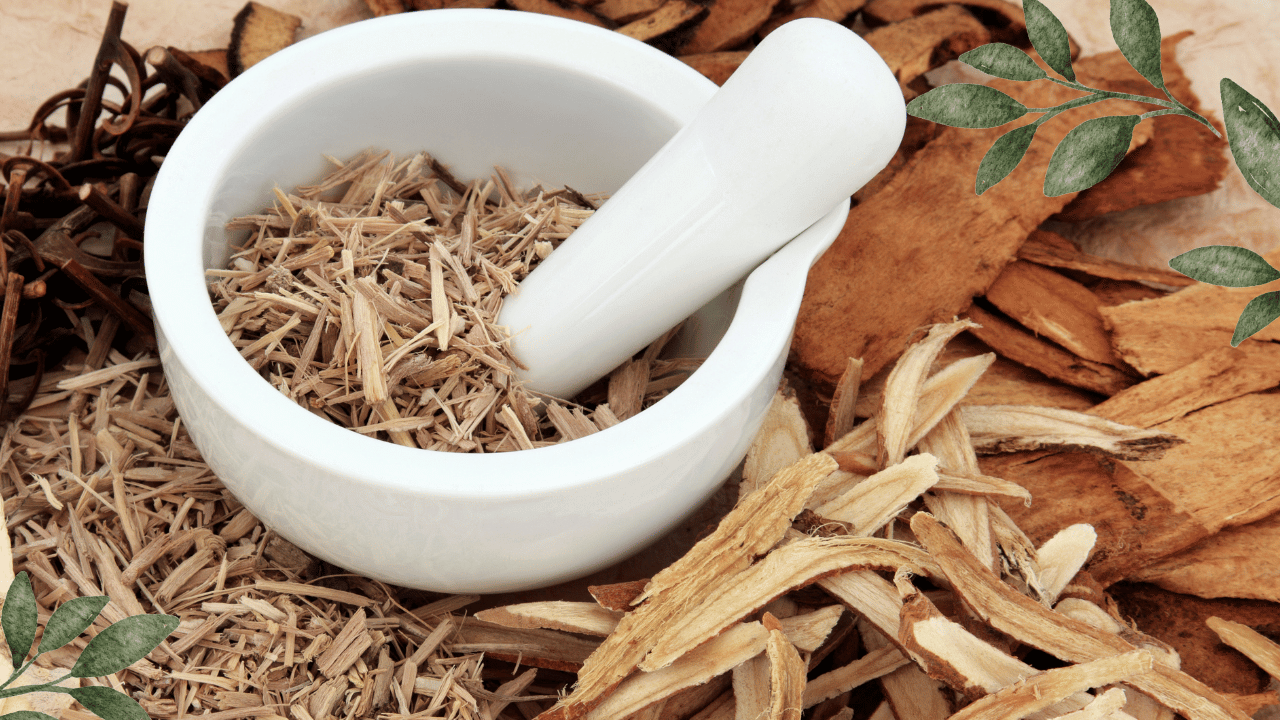
Many of the plants we work with for mental stress, anxiety, and worry are the same plants we work with for physical tension, muscle tightness, and chronic pain rooted in stress. Not because we’re doubling up or borrowing from one territory to serve another. Because the body doesn’t actually separate these dimensions the way our modern medical categories do. A plant that eases a tight nervous system often also eases a tight body, because the two are expressions of the same underlying pattern! Much of what we do in a consultation is explore these patterns, define their parts, assess how they’re activating, then make a plan to address them with herbs, foods, movement, and mindset.
This overlap is one of the most beautiful features of traditional herbal medicine. Certain plants gently ease chronic muscular bracing by calming the sympathetic activation that produces the bracing in the first place. Others support the physical tissue around chronically held muscles while simultaneously softening the anxiety or worry that keeps them held. Others address the specific pain patterns that chronic stress generates by working on multiple layers at once. Nervous system support. Inflammation. Tissue nourishment. Circulation. Deep rest. All happening together, from the same thoughtfully chosen plants.
In my clinical practice, when a client comes in with chronic tension, muscle tightness, or stress-related pain alongside anxiety or chronic stress, we often don’t need separate formulas for the mental and physical dimensions. A single personalized formula, carefully built, can address both at once. The herbs that quiet the alarm in the mind also quiet the bracing in the shoulders. The herbs that nourish the depleted nervous system also help the fatigued muscles recover. The herbs that support deep sleep also allow the body’s natural tension-release processes to work overnight the way they’re meant to.
This whole-person coherence is one of the most important differences between herbal medicine and more fragmented approaches to care. The plants work on the whole system because they are themselves whole beings. They don’t isolate active molecules the way pharmaceutical approaches do. They offer their full, complex, intelligent medicine to a body that recognizes it as kin.
Why Personalized Assessment Matters… Especially for This Pattern
I want to name something important here, because the overlap I just described is so amazing- but it doesn’t mean picking any popular stress herb off the shelf will produce the results you’re looking for (and often the exact opposite happens!).
The right plants for your specific pattern of mental and physical tension depend on your constitution, your particular landscape of stress, where the tension lives in your body, what emotions tend to accompany it, how long you’ve been carrying it, what else is going on in your overall picture, and many other dimensions that only emerge through thoughtful clinical assessment. It’s a whole Venn diagram of you and your story.
Two people can both be describing chronic shoulder tension alongside anxiety, and the herbs that genuinely serve each of them may be completely different. One may need warming, moving plants that help release the holding. The other may need cooling, settling plants that soften the underlying activation. One may benefit from plants that nourish depleted tissue. The other may need plants that reduce acute inflammation. Getting the match right requires skilled assessment and personalized formulation, which is why I feel so strongly about the value of working with a qualified clinical herbalist for this kind of work. In cases where the wrong specific herbs are applied to the correct general condition, we often see worsening experiences and aggravation of seemingly unrelated symptoms.
In our sessions together at Flow Acupuncture and Apothecary in Salt Lake City, we take the time to understand your specific pattern thoroughly. We use traditional assessment tools alongside modern tools like heart rate variability (HRV) monitoring. From that whole picture, we build a custom formula designed specifically for the body and the nervous system in front of me. The plants chosen reflect your real pattern, not a generic recommendation. The resulting care works both the mental and physical dimensions of your stress at once, which is what makes real change possible.
The relaxation techniques above are adapted from the American Institute of Stress and are used here with appreciation for their ongoing contribution to the public conversation about stress and wellness.
Simple Physical Relaxation Techniques You Can Begin Using Today
Alongside personalized herbal care, there are several simple techniques for releasing physical tension that I love teaching to clients and that research consistently supports. The techniques below come from the American Institute of Stress, and they’re beautiful starting points for anyone wanting to begin softening the chronic bracing their body has been holding.
I want to say something about how to approach these. The techniques work best when they’re done super slowly, consistently, and without a sense of trying to achieve anything. Showing up and doing the movement is the win, period.
The nervous system responds to invitation, not to pressure. If you approach these practices as something to accomplish, your body often tightens rather than releases. If you approach them as a gentle offering to a tired body, they begin to work almost immediately. Trust the slowness. Trust the gentleness. The body knows how to let go when it’s invited rather than forced.
Soothing Stretches
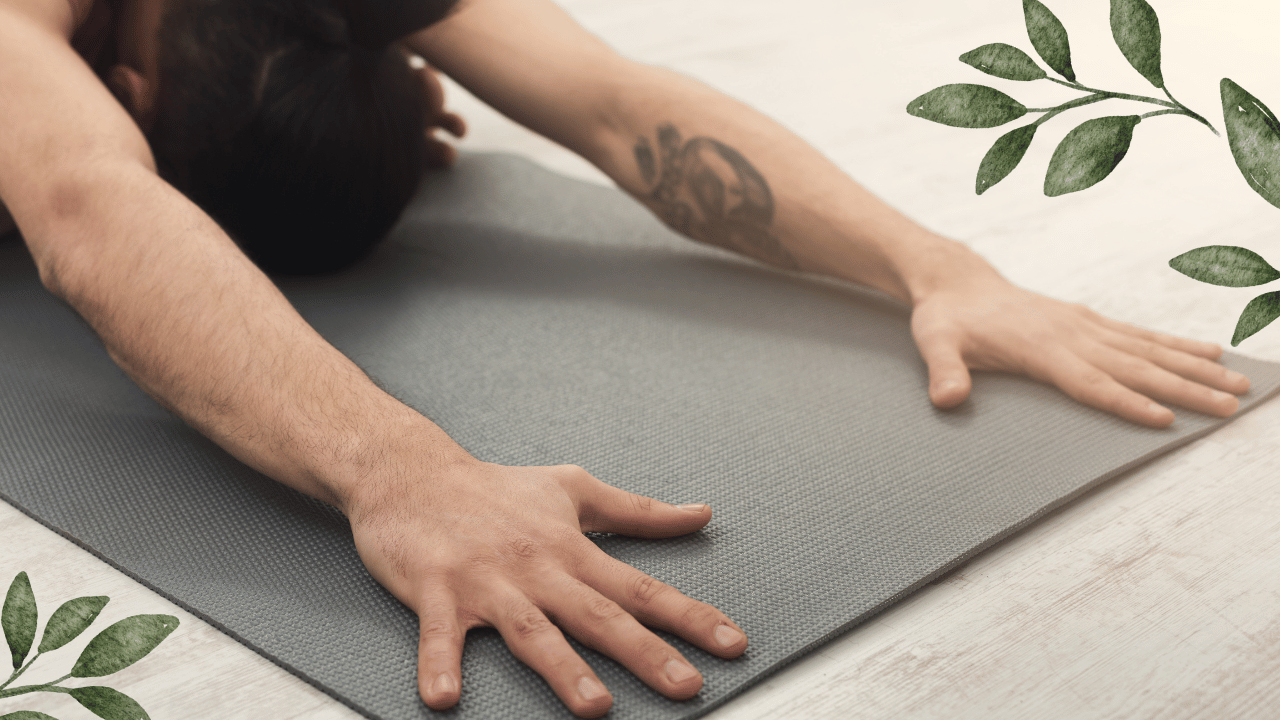
Gentle, intentional stretching releases physical tension while simultaneously signaling safety to the nervous system. A few that are especially helpful.
Neck Roll. Let your chin drop toward your chest. Slowly roll your head to the left so your left ear moves toward your left shoulder. Then roll your head gently backward, letting it hang as far back as is comfortable. Continue by rolling your head to the right so your right ear moves toward your right shoulder. Complete the roll until your chin returns toward your chest. Then roll in the opposite direction. Repeat three times on each side. Move slowly. Breathe through the movement. Pay attention to where you feel the stretch.
Shoulder Shrug. Begin with your shoulders relaxed. Slowly shrug them forward and upward, then roll them down toward the back of your body. Once your shoulders return to their natural position, pause and release. Repeat the movement in the opposite direction. Repeat three times. This simple sequence releases accumulated tension in the upper trapezius muscles that so often hold chronic stress.
Lumbar Stretch. Standing or sitting, place both of your hands on the small of your back. Slowly arch your back, feeling the stretch across the front body and through the lumbar spine. Release the arch. Repeat three times. For anyone whose lower back carries chronic stress, this simple stretch can produce surprising relief when done regularly.
Side Stretch. With your left hand on your left hip, extend your right arm straight out from your body. Gently stretch your right arm overhead, bending to the left at the waist as far as is comfortable. Hold the stretch briefly. Return slowly to standing. Repeat on the opposite side. Repeat three times on each side. The side body often holds tension we barely notice, and this stretch releases it beautifully.
Yoga. If you want to go deeper with these kinds of practices, working with a skilled yoga teacher, either in person or through quality online instruction, can offer sustained, comprehensive support for releasing chronic physical tension. I really enjoy restorative classes at City Centered Yoga on 9th and 9th, and when I’m feeling like a spicier flow I love Core Power Yoga at Trolley Square.
Deep Breathing
Your breath is one of the fastest and most reliable ways to shift your nervous system state and release physical tension.
Box Breathing. A simple, powerful technique named after the four sides of a box. Breathe in slowly to a count of four seconds. Hold your breath for four seconds. Exhale slowly for four seconds. Hold for four seconds. Repeat four or more times. This technique directly activates the parasympathetic nervous system, slows the heart rate, and begins releasing muscular tension within minutes. I love this one for its simplicity and effectiveness, and I often teach it to clients as a daily anchor practice.
Meditation
Meditation builds the capacity to be present with your body without the overlay of chronic worry, which allows accumulated tension to begin softening. A few forms worth exploring.
Mindfulness Meditation. A stationary practice that involves focusing your attention on the present moment without judgment. Close your eyes and concentrate on your breath. Notice the sensation of air entering and leaving your body. When your mind wanders, gently bring your focus back to your breathing. You can also practice mindfulness by focusing on sounds around you. Even a few minutes a day meaningfully supports nervous system regulation and physical release.
Guided Meditation. A form of stationary meditation led by a teacher who provides visualization cues or self-compassion suggestions throughout. This is especially helpful for beginners who want structure and guidance. Guided meditations vary widely in length, making them easy to fit into any schedule, and the guided quality often lets people drop in deeper than they could on their own.
Walking Meditation. A simple practice that combines movement and mindfulness. As you walk slowly, pay attention to how your feet lift and touch the ground with each step, your breath, and the sensation of your body shifting as you move. When your mind wanders, gently bring your focus back to the movement and your breath. This practice is particularly beneficial for people who find stationary meditation difficult, and it works beautifully in nature. We’re fortunate along the Wasatch Front to have extraordinary access to places where this practice can unfold.
Weaving These Practices Together With Herbal Care
The techniques above are genuinely helpful on their own. When they’re woven together with personalized herbal medicine, they become significantly more powerful.
Here’s why. The herbs do slow, cumulative work on the underlying nervous system state that’s been producing the chronic tension in the first place. The daily practices give you immediate tools to use in the moment and build the embodied capacity to work with your body throughout the day. Together, they address both the deeper physiological picture and the daily experience of being in your body. Neither alone could produce the kind of integrated change that both together make possible.
In my clinical work, I design a small set of these practices with each client specifically to fit their body, their life, and their current capacity. Not everyone needs all of them. Someone may benefit most from the breathing practice alone. Someone else may need the stretches as their foundation. Someone else may thrive with walking meditation. The point isn’t elaborate protocol. The point is finding the small set of practices that fit your life and that you’ll actually sustain, because consistency over months is what produces real change.
Finding Your Calm
Let me give you an honest picture of what recovery from chronic tension, stress-related pain, and limited range of motion can look like with integrated care.
In the first few weeks of consistent herbal support paired with simple daily practices, the shifts are often subtle but real. You might notice an afternoon where your shoulders feel a little looser. A morning where your lower back isn’t quite as tight. An evening where you breathe more deeply than you have in a while. These small moments matter. They’re the first evidence that the chronic bracing is beginning to soften.
Over the following months, the deeper work compounds. Baseline tension drops. Range of motion gradually returns. Pain patterns ease. Sleep deepens, which itself allows the body to do more of its own tension release overnight. Your relationship with your body begins to shift. You start inhabiting yourself again rather than fighting with a body that feels locked.
By six months of consistent, integrated care, many clients describe a fundamentally different experience of being in their body. The chronic tightness has significantly softened. The pain that had been a daily companion has eased or resolved. Movement feels more natural. Breathing feels more full. The body has become a place to live in rather than a battlefield.
This is real. It’s available. It’s what personalized herbal medicine paired with simple, sustained daily practice can offer anyone whose body has been holding what their life has been asking it to carry.
If chronic tension, muscle tightness, limited range of motion, or stress-related pain has been part of your daily experience, and you’re ready to explore how personalized herbal care could meet both your body and your nervous system at once, I’d be honored to walk this path with you. An initial consultation is a calm and unhurried place to begin. There’s no pressure. Only the offer of care that reflects the real depth of what traditional clinical herbal medicine, combined with gentle daily practice, can offer for a body that’s been holding too much for too long.