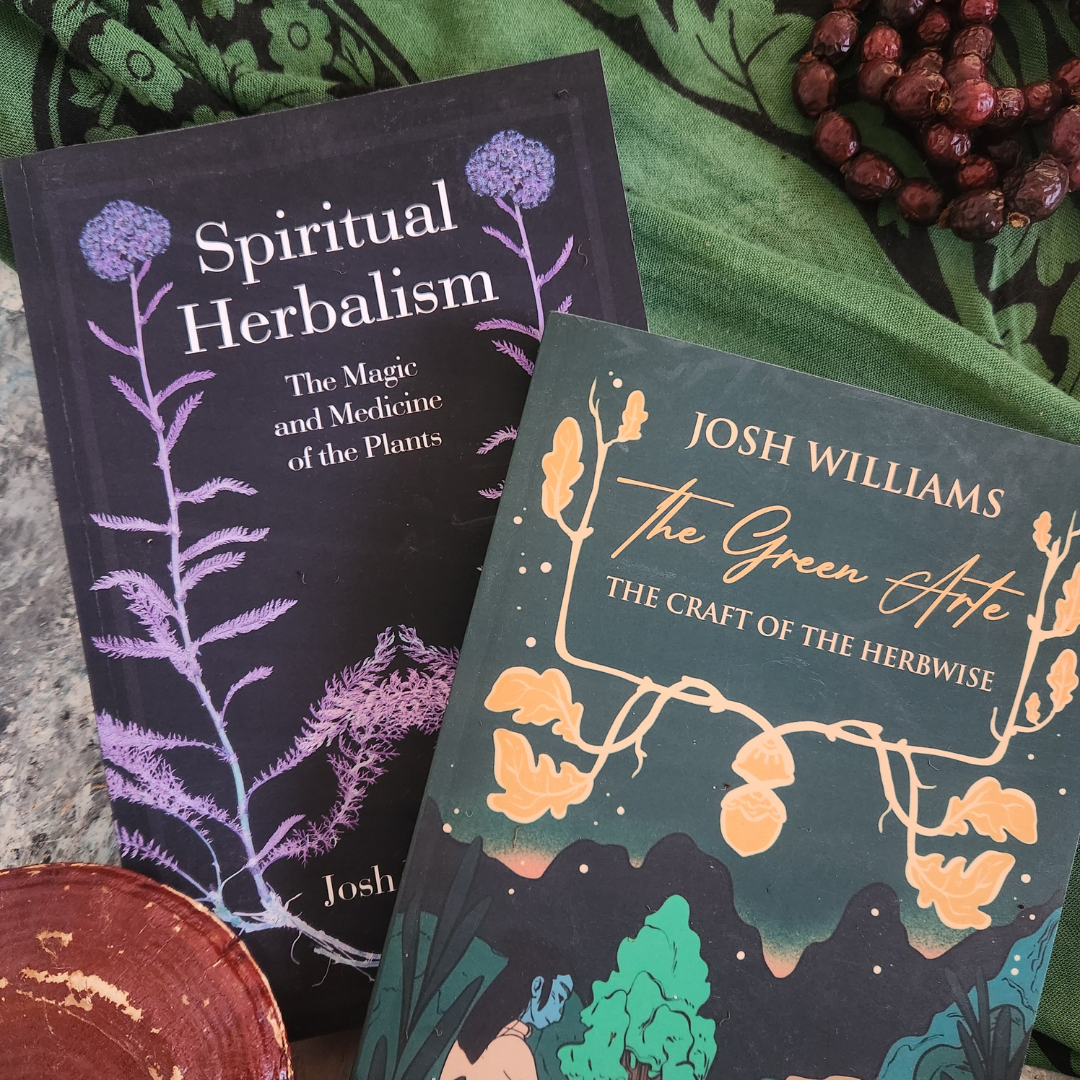
Spiritual Herbalism in Salt Lake City, Utah
Plant centered, mindful, and ritualized herbal medicine grounded in clinical experience
If you are searching for spiritual herbalism in Salt Lake City, you may be looking for a form of herbal medicine that goes deeper than easing a symptom. You may sense that the plants are more than remedies, that they are living allies, teachers, and companions, and that your healing involves not only your body but your sense of meaning, presence, and connection to the living world.
As a clinical herbalist with advanced training and more than a decade of private practice along the Wasatch Front, I offer spiritual herbalism that is grounded, safe, and genuinely transformative. This is not vague or theatrical work. It is the patient, relational, time honored practice of healing through our relationship with plants, held within the discernment of clinical experience and supported by a full herbal apothecary. On this page I want to share what spiritual herbalism actually is, how chronic stress quietly undermines our spiritual lives, and the ancient practices I teach my clients to restore depth, presence, and belonging.
What Spiritual Herbalism Is
Spiritual herbalism is an approach to working with plants that recognizes them not only as therapeutic agents but as living beings with their own intelligence, presence, and capacity for relationship. It is herbal medicine practiced with reverence, attention, and the understanding that healing the body and cultivating the spirit are not separate projects.
In my practice, spiritual herbalism may include mindful and embodied engagement with plants, an ongoing relationship with specific plant allies, simple and intentional rituals woven into daily life, the cultivation of attention and receptivity, and an awareness of the seasonal and ecological rhythms we live within. It is quiet, attentive, and relational rather than dramatic or performative.
Crucially, spiritual herbalism does not replace clinical reasoning. In my work, it lives alongside it. The clinical herbalist in me provides safety, pattern recognition, and grounded support for the body. The spiritual dimension provides meaning, relationship, and depth. Together they form one coherent practice, and most of my clients move fluidly between the two without ever needing to choose.
Stress Is Often the Hidden Root of Spiritual Disharmony
One of the most important things I have learned in years of clinical and spiritual herbal practice is that much of what we experience as spiritual blockage, dryness, or stagnation is not a failure of faith or discipline. It is very often a nervous system that has been under the weight of chronic stress for too long.
This matters because the body and the spirit are not separate. The states we associate with spiritual depth, presence, stillness, awe, surrender, and a felt sense of connection, all arise most readily when the nervous system is settled and feels safe. When we live in chronic stress, the body stays locked in a defensive, self protective posture, and that posture quietly closes the very doors that spiritual life asks us to walk through.
Chronic stress affects our spiritual lives in three deep ways. First, it locks the body out of the calm, receptive states that contemplative practice requires, which is why so many people feel they cannot meditate, cannot drop in, or cannot feel what they are reaching for. Second, it distorts perception and discernment, flooding everything with low level fear so that it becomes hard to tell the difference between genuine intuition and an anxious nervous system. Third, and perhaps most painfully, it severs the felt sense of belonging and connection that is the very ground of spiritual life, leaving us feeling isolated and cut off from ourselves, from others, and from the living world.
If you have felt spiritually stuck despite sincere effort, this may be why. The barrier is often not spiritual at all. It is a body that has not felt safe enough to open. And this is workable. This is exactly where herbal medicine and spiritual practice, woven together, can help.
How Plant Medicine and Spiritual Practice Restore What Stress Has Severed
The encouraging truth is that the nervous system can recover, and as it does, our spiritual capacities tend to return on their own. We do not have to force spiritual experience. We have to restore the conditions in which it becomes possible again, and the plants are remarkably good at helping us do this.
Herbal medicine restores the physiological ground. Nervine and adaptogenic plants gently bring an overactivated system down out of survival mode, soften the armoring around the heart, and rebuild the depleted nervous system, so that genuine stillness, presence, and openness become available again. The herbs do not manufacture spiritual experience. They tune the instrument so that the music can come through.
Spiritual practice then deepens and directs that restored capacity. Mindful ritual, contemplative engagement with plants, and a reawakened relationship with the living world rebuild discernment, refine perception, and reweave the sense of belonging that chronic stress strips away. In my experience, the combination is far more powerful than either alone. The herbs settle and nourish the body. The practices open the heart and the senses. And the spirit, no longer locked behind a wall of stress, begins to breathe again.
Ancient Meditations, Rituals, and Practices That Center Our Work With the Plants
A central part of my spiritual herbalism practice is teaching clients simple, powerful, and time honored practices that place the plants at the heart of their spiritual life. These are not inventions or performances. They are grounded, accessible forms of practices that human beings have used for as long as we have lived in relationship with plants. I teach them in a way that fits real, modern life in Salt Lake City rather than requiring retreat level commitment.
The daily tea ritual is the foundation. Far more than a way to take herbs, a mindful tea ritual is a ceremony of presence, a scheduled pause that settles the nervous system, centers the spirit, and creates a daily moment of intentional relationship with the plant world. For many clients it becomes the cornerstone of both their healing and their spiritual practice.
Meditation with herbal allies brings the plants directly into contemplative practice. By holding, smelling, tasting, and sitting in stillness with a single plant, we engage the senses and the body, not only the mind, which makes meditation more accessible and far more relational. Over time this practice builds a genuine felt relationship with the plant and a reliable doorway back into presence and calm.
Plant spirit communion is the slow, patient cultivation of relationship with a specific plant ally. Because a plant does not deceive or manipulate, it becomes a uniquely trustworthy partner for rebuilding faith in our own perception after stress has scrambled it. This work refines the subtle senses and restores discernment, and it both requires and deepens nervous system regulation at the same time.
Ritual immersion and anointing bring the plants into contact with the body in ways that are deeply settling and sacred. Herbal baths, foot soaks, and the intentional anointing of the body with plant infused oils are ancient practices that calm the nervous system through warmth, scent, and touch, while also carrying a quiet ceremonial power.
Medicine making as devotion turns the act of crafting an herbal preparation into a meditative ritual. Slowly making an infused honey, a tincture, or an oxymel restores a sense of agency and intimacy with the plants, and the finished medicine carries the intention woven into its making.
Dream work and seasonal attunement round out the practice. Working gently with dreaming plants such as Mugwort, and aligning our herbal practice with the turning of the seasons along the Wasatch Front, weaves our inner life back into the larger rhythms of the living world, which is itself profoundly grounding and restorative.
Each of these practices is taught within a grounded, safety conscious framework, and tailored to where each client is in their healing and their spiritual life.
Grounded in Clinical Herbal Training and a Working Apothecary
While this page emphasizes the spiritual and relational dimensions of herbal medicine, I want to be clear that this work is not improvised or ungrounded. I bring advanced clinical herbal training and more than ten years of private practice into every client relationship.
This clinical foundation ensures that spiritual herbal work remains safety conscious, pattern aware, appropriate in scope, and integrated with your physical and psychological reality. Every custom formula is thoughtfully compounded in the herbal apothecary at Flow Acupuncture and Apothecary in Salt Lake City, selected specifically for your constitution, your pattern, and your needs. The contemplative and ritual elements of this practice are always held within a container shaped by clinical experience, ethics, and long term care. Depth and discernment are not in tension here. They support each other.
Who Is Drawn to Spiritual Herbalism
People who seek this work often feel called toward a deeper relationship with plants, desire spiritual cultivation that is rooted in the body rather than abstract, have outgrown purely mechanical approaches to health, and want ritual and meaning woven into everyday life. They tend to value slow, attentive, and respectful practice over dramatic experiences.
Many also arrive carrying clinical concerns such as chronic stress, anxiety, fatigue, sleep disruption, low mood, or hormonal transitions, and they discover that the spiritual and clinical dimensions of herbal medicine support one another. As the body settles and the nervous system heals, the spiritual life opens. As the spiritual life deepens, the body finds new resources for resilience.
Spiritual Herbalism and Place: Salt Lake City and the Wasatch Front
Practicing spiritual herbalism in Salt Lake City carries particular meaning. The meeting of desert basin, mountain range, and busy urban life creates strong contrasts between speed and stillness, between extraction and relationship. These same contrasts are often what drive the chronic stress and disconnection so many people here carry, and they are also what make the longing for reconnection so strong.
This work is informed by the seasonal rhythms of the Wasatch Front, by awareness of our local ecologies, and by the realities of modern life in Utah. Spiritual practice here is designed to be place aware and genuinely livable, woven into ordinary days rather than removed from them. We are fortunate to live where profound natural landscape is so close at hand, and that landscape becomes a partner in the healing.
Is This Work Right for You
Spiritual herbalism may be a good fit if you are drawn to ritual and contemplative practice, want spiritual depth grounded in clinical discernment, prefer slow and relational work over dramatic experiences, and are willing to engage the plants with respect and patience. It is especially supportive for people who sense that chronic stress has dulled their spiritual life and who want a grounded, embodied path back to presence and connection.
It may not be the right fit if you are seeking immediate symptom suppression, entertainment, or uncontained altered states. Clear boundaries and honest scope are part of ethical spiritual practice, and we will talk openly about all of this in our first conversation.