Stress is part of being alive. A deadline, a hard conversation, a long drive in winter traffic: your body is built to meet moments like these, rise to them, and then settle back down.
Chronic stress is different. It's the stress that never quite lets up, the kind that hums in the background for months while you keep going. Over time, it stops being something you feel only in your thoughts and starts showing up in your body: in your blood pressure, your digestion, your skin, your sleep.
If that sounds familiar, there is real reason for hope. The same body that adapts to stress is also remarkably good at recovering from it, given the right support. In this post, we'll look at where chronic stress tends to show up, why herbal medicine is so well suited to helping, and why chamomile, one of the gentlest herbs we have, is a beautiful place to begin.
When the alarm won’t shut off
Your stress response is an ancient, elegant survival system. When you sense a threat, your brain signals your adrenal glands to release adrenaline and cortisol. Your heart speeds up, blood sugar rises, muscles tense, and your body diverts energy toward action.
In short bursts, this is exactly what you want. It sharpens focus and gets you through the moment. Then, once the threat has passed, your parasympathetic nervous system (often called rest and digest) takes over, and the body returns to repair, digestion, and restoration.
The trouble begins when that return never fully happens. Work pressure, caregiving, financial worry, grief, poor sleep, or simply the pace of modern life can keep the alarm quietly ringing for weeks or months. When it does, the body stays tilted toward survival mode:
Blood pressure and heart rate stay elevated instead of settling.
Inflammation rises, as long-term cortisol exposure makes the immune system less responsive to its own "calm down" signals.
Digestion and tissue repair get deprioritized, because a body bracing for danger doesn't invest in long-term upkeep.
Immune defenses run lower, leaving you more open to infections and slower to heal.
None of this means something is wrong with you. It means your body is doing what it was designed to do, just for far longer than it was designed to do it.
Where chronic stress shows up in the body
Stress is rarely the only cause of a health concern, but it is one of the most common triggers and amplifiers. Here are the places it tends to show up first.
Heart and circulation
Persistently elevated stress hormones keep blood vessels constricted and the heart working harder. Over time, this contributes to high blood pressure and raises the risk of heart disease.
The gut
The gut and brain are in constant conversation, which is why stress so often lands in the belly. Irritable bowel syndrome (IBS), acid reflux, bloating, and flare-ups of inflammatory bowel disease are all closely linked to stress.
The skin
Your skin is a sensitive barometer of your inner state. Eczema, psoriasis, acne, and hives commonly flare during stressful stretches, as stress-driven inflammation reaches the surface.
The immune system
People under long-term stress tend to catch more colds, heal more slowly, and may see autoimmune conditions become more active.
The head
Tension headaches and migraines are among the most familiar stress responses, often tied to tight shoulders, a clenched jaw, and shallow breathing.
Mood and sleep
Chronic stress and anxiety, low mood, and insomnia tend to feed each other. Poor sleep raises stress, and stress makes restful sleep harder to reach.
Notice how interconnected these are. A stressed nervous system disrupts sleep, poor sleep inflames the gut, an unsettled gut affects mood. That interconnection is exactly why a whole-person approach matters.
The good news… it works in reverse, too!
Here is the hopeful part, and it's worth sitting with. The body that learned to live in survival mode can learn its way back out.
When your nervous system receives steady, repeated signals of safety, it begins to shift back into rest-and-repair mode. Digestion has room to work again. Inflammation can settle. Sleep deepens. Mood steadies. Many people find that symptoms they'd come to think of as "just how I am" begin to soften once their stress load is addressed.
You don't have to eliminate stress from your life for this to happen. That isn't possible for anyone. What your body needs is regular chances to recover, and support while it relearns how.
Why herbal medicine is so well suited to this work
Chronic stress isn't a single problem with a single fix. It's a pattern that touches the whole person, and herbal medicine has always worked at the level of patterns.
That's what makes plants such natural allies for a stressed nervous system:
Herbs work gently and cumulatively
Many nervine herbs, the plants traditionally used to nourish and calm the nervous system, are meant to be taken steadily over weeks and months. That rhythm matches the way resilience is actually rebuilt: gradually, through repetition.One herb often helps several systems at once
Because stress spreads across the body, a plant that calms the mind and settles digestion and eases inflammation is doing exactly the kind of joined-up work that's needed.Herbal care is built around the individual
A good herbal consultation looks at how stress shows up for you: your sleep, your digestion, your energy, your history. The formula follows from that picture.The ritual itself is restorative
Pausing to brew a cup of tea, breathe in its aroma, and drink it slowly is a small daily signal of safety to your nervous system.
The goal isn't to sedate you or mask your symptoms. It's to help your nervous system become more resilient: better able to meet stress, and quicker to return to calm afterward.
Spotlight on Chamomile · a gentle herb with real power
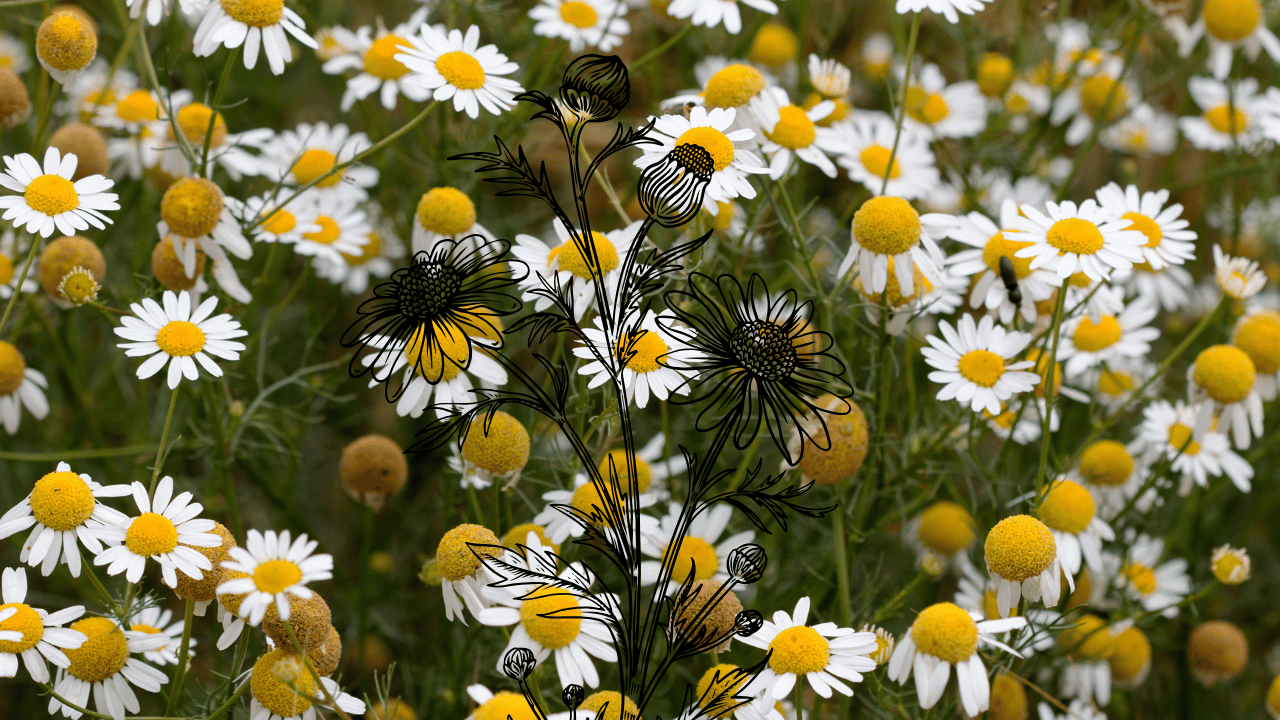
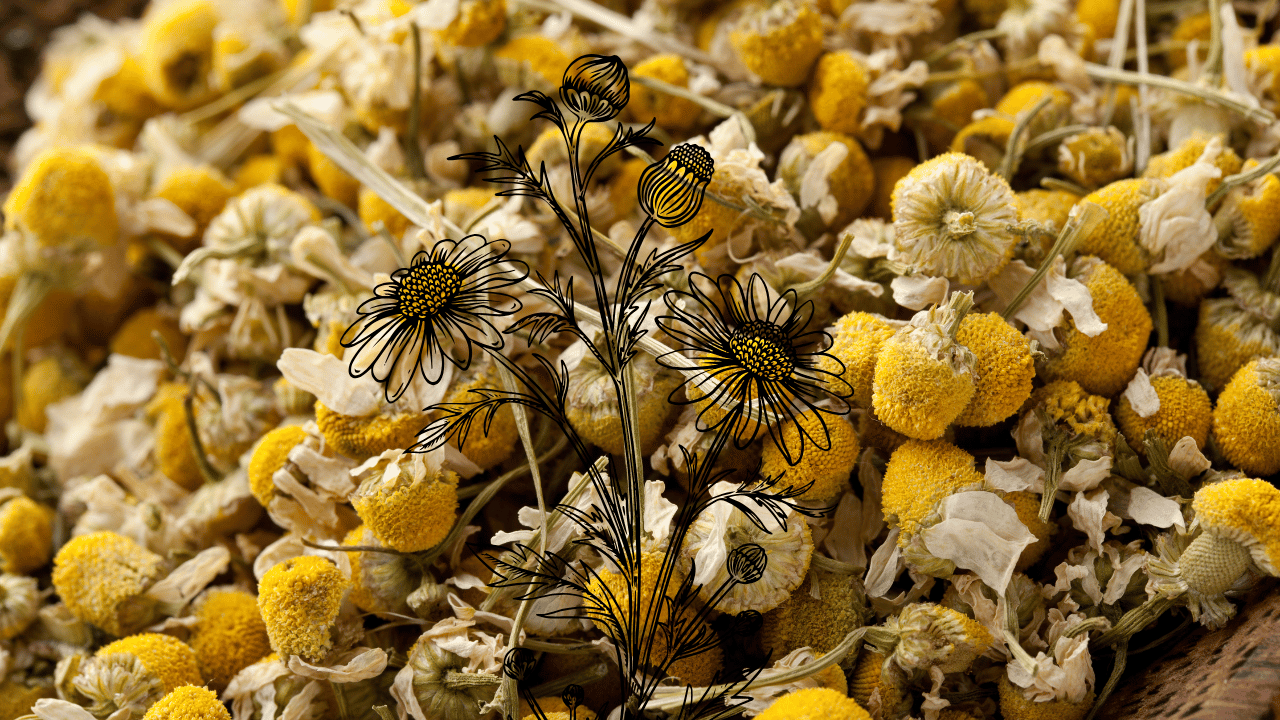
If there's one herb that embodies the spirit of gentle, steady support, it's chamomile (Matricaria chamomilla). Those small, apple-scented, daisy-like flowers have been called "one of the most ancient medicinal herbs known to mankind" (Srivastava et al., 2010). They've been brewed for frayed nerves, unsettled stomachs, and restless nights across countless generations and cultures.
It's easy to underestimate chamomile because it's so familiar. That would be a mistake. What makes it such a beautiful place to begin is how naturally it meets chronic stress at several of its pressure points at once.
Calming the nervous system
Chamomile is a classic nervine. It relaxes without dulling, settling an overactive mind while leaving you clear and present. Researchers believe some of this comes from its flavonoids, especially apigenin, which appear to interact with the same calming receptors in the brain that anti-anxiety medications act on.
The clinical research is encouraging. In a 2016 randomized trial at the University of Pennsylvania, 179 adults with generalized anxiety disorder took chamomile extract for 12 weeks. Those who responded were then split into two groups for another six months. People who stayed on chamomile kept significantly lower anxiety scores and reported better well-being than those switched to a placebo. Fewer of them relapsed (15% vs. 26%), although that difference didn't reach statistical significance in this smaller follow-up group.
Supporting the heart
That same trial found a welcome side benefit: people taking chamomile had significantly lower systolic and mean arterial blood pressure than the placebo group. It's a small, early finding, but it fits the bigger picture. When the nervous system calms down, the cardiovascular system often follows.
Restoring sleep
A 2024 systematic review and meta-analysis of 10 clinical trials (772 adults) found that chamomile significantly improved overall sleep quality. It was especially helpful for waking less often during the night and staying asleep. The studies varied quite a bit, so there's more to learn, but the direction is promising.
Soothing the gut
Traditionally, chamomile is one of herbalism's most trusted digestive herbs. It's valued as a carminative (easing gas and bloating), an antispasmodic (relaxing cramping in the gut), and a gentle anti-inflammatory. For anyone whose stress lands squarely in the belly, that combination is a natural fit.
Calming inflammation and the skin
Chamomile's anti-inflammatory qualities have long made it a favorite for irritated skin, used both as a tea and topically in compresses and washes.
Chamomile works best in good company
As helpful as chamomile is on its own, it's at its most powerful as part of a harmonious formula. Herbalists rarely rely on a single plant. A formula brings several herbs together so each supports and balances the others: a nervine to calm, a bitter or carminative to steady digestion, an adaptogen or nourishing herb to rebuild reserves. Chamomile is often a gracious team player in that kind of blend.
Simple ways to begin with chamomile
A strong cup of tea
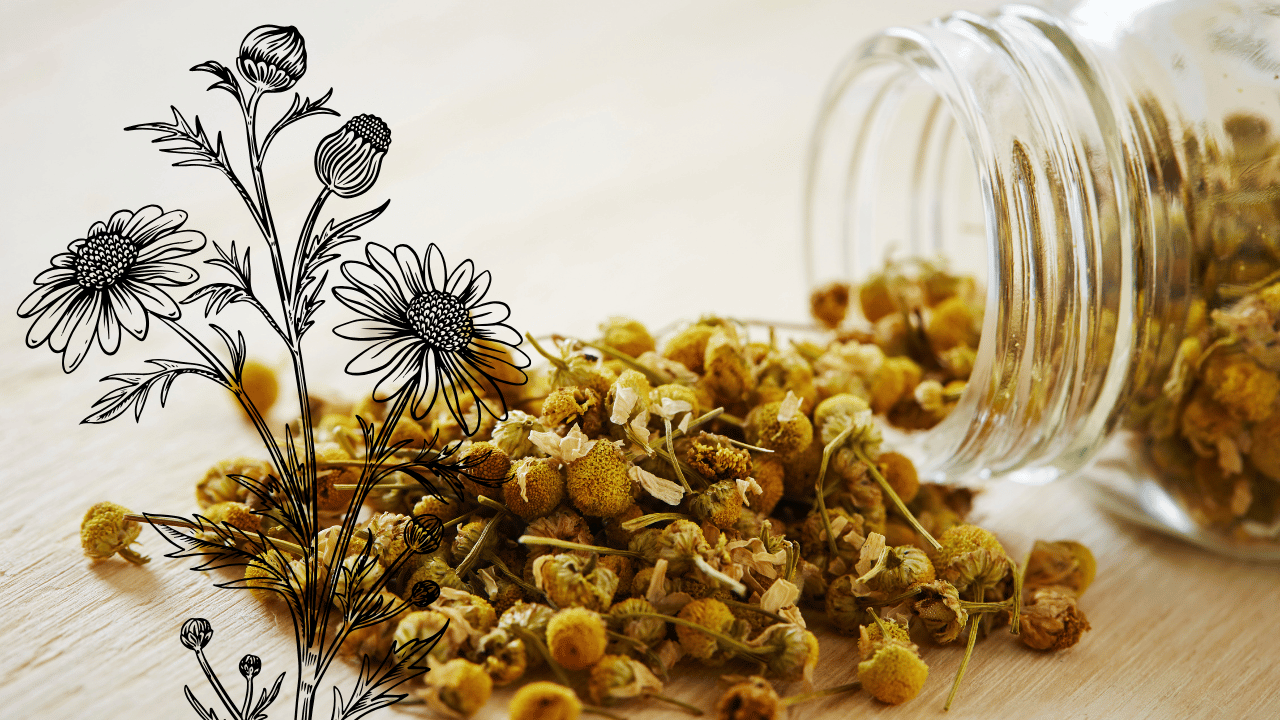
Use 1 to 2 tablespoons of dried flowers per cup of just-boiled water. Cover it while it steeps for 10 to 15 minutes to keep the aromatic oils in your cup.Make it a ritual
An afternoon cup can mark a pause in a busy day. An evening cup can signal to your body that it's time to wind down.Be consistent
Chamomile's gifts build over time. A daily cup for several weeks tells you far more than an occasional one.
Why a formula made for you makes the difference
Chamomile can be genuinely helpful for chronic stress. Still, the most meaningful results usually come from herbs combined in a harmonious formulation written specifically for you.
That's because no two people carry stress the same way. Consider three people who all say "I'm stressed":
One is wired and anxious, with racing thoughts at 2 a.m. and a stomach in knots.
Another is depleted and flat, running on coffee, catching every cold that goes around.
A third carries it in the body: tight shoulders, tension headaches, and skin that flares every busy season.
Chamomile may have a place in all three formulas, but the herbs around it, the proportions, the form (tea, tincture, or capsule), and the timing would look quite different for each person. A thoughtfully written formula also accounts for your health history, any medications you take, and how your body responds as things begin to shift. It isn't a one-time prescription. It evolves with you as your nervous system grows stronger.
That's the heart of herbal medicine: not a remedy for a symptom, but support shaped around a person.
Daily practices that help herbs do their best work
Herbs are powerful partners, and they work best alongside simple daily habits that also tell your body it's safe.
Breathe slowly
Try making your exhale longer than your inhale for five minutes. This is one of the most direct ways to engage your rest-and-digest response.Move every day
It doesn't need to be intense. A gentle walk counts and helps burn off stress hormones.Get outside
Time among trees, mountains, and open sky settles the nervous system in a way few things can.Protect your sleep
Keep a consistent bedtime and put screens away an hour before. An evening cup of chamomile fits beautifully here.Stay connected
Talk with people you trust. You don't have to carry it all alone
Building a more resilient nervous system, one cup at a time
Chronic stress can feel all-encompassing, but your body has a deep, built-in capacity to recover. With the right support, it can relearn the rhythm of rising to a challenge and then returning to calm. That's what resilience really is.
Chamomile is a wonderful first step: gentle, time-tested, and backed by encouraging research. Brew a cup tonight and notice how it feels to give yourself that pause. And when you're ready to go deeper, remember that herbs are at their best in a formula written for you: your history, your stress patterns, your goals.
If you'd like support creating a plan that fits your life, I'd love to work with you. Schedule a session and let's begin building a calmer, steadier foundation together.
A note on safety
Chamomile is considered likely safe in the amounts found in teas. However, people allergic to ragweed, daisies, chrysanthemums, or marigolds are more likely to react to it. Chamomile may interact with some medications, including the blood thinner warfarin, and may have estrogen-like effects. Little is known about its safety during pregnancy or breastfeeding (NCCIH). If you take medications, are pregnant or nursing, or have a health condition, talk with your healthcare provider before starting any herb. This post is for education only and isn't a substitute for medical care.
Sources
Mao JJ, et al. Long-term chamomile (Matricaria chamomilla L.) treatment for generalized anxiety disorder: A randomized clinical trial. Phytomedicine, 2016.
Kazemi A, et al. Effects of chamomile (Matricaria chamomilla L.) on sleep: A systematic review and meta-analysis of clinical trials. Complementary Therapies in Medicine, 2024.
Srivastava JK, Shankar E, Gupta S. Chamomile: A herbal medicine of the past with a bright future. Molecular Medicine Reports, 2010.
National Center for Complementary and Integrative Health. Chamomile.