Herbal Medicine for Adrenal Fatigue and Deep Exhaustion: A Grounded Look From a Salt Lake City Herbalist
Why the tiredness you're carrying is an invitation to heal, why it's not exactly what social media says it is, and how herbal medicine can actually help, for real.

If you've landed here searching for support with adrenal fatigue, you're almost certainly carrying a specific kind of exhaustion that ordinary rest doesn't fix. The mornings that already feel behind. The afternoon crashes that no amount of coffee can lift. The evenings where you're wired and depleted at the same time. The sense that you've been running on empty for so long you can't even remember what having reserves felt like.
This experience is genuinely real, and it deserves to be taken seriously. In my clinical herbal practice here in Salt Lake City, it's one of the most common patterns I see. People arrive tired in a way that's difficult to describe to anyone who hasn't felt it. They've often already tried the popular supplements. They've read the articles. They've adjusted their sleep. And they're still tired.
I want to explore this with you honestly, because the conversation around adrenal fatigue has become genuinely confusing, misleading, and plain dangerous on some of the social media posts I’ve seen lately. There's a lot of overpromising in the wellness space (even with herbalists!), and there's also some real dismissal from the conventional medical world. The truth sits in a more grounded and hopeful middle place, and that's where thoughtful herbal medicine actually lives. Let me walk you through what's really happening in your body, and how the plants can help.
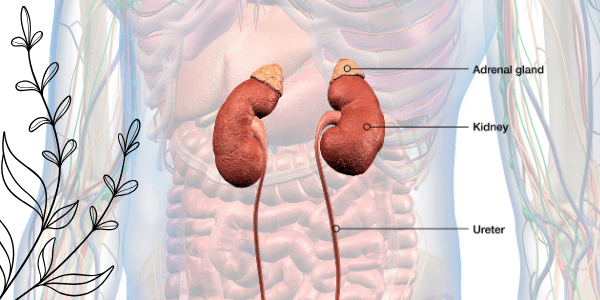
What the Adrenals Actually Do
Let's start with what your adrenal glands are, because understanding them is foundational to understanding both what's happening to you and why the conversation around this topic gets complicated.
Your adrenal glands are two small, walnut-sized glands that sit on top of your kidneys like little hats. Despite their size, they do enormous work, and a lot of it. They're responsible for producing the hormones that manage your stress response, your energy regulation, your blood pressure, your blood sugar, your immune function, and your sleep-wake cycles. Every time your body needs to respond to challenge, whether that's a physical demand, an emotional stressor, or a moment of danger, your adrenals are central to how you meet it.
The adrenals produce several important hormones, but the two most relevant to this conversation are cortisol and adrenaline. Cortisol's your main long-haul stress hormone, released in a natural daily rhythm and responsive to ongoing demands. Adrenaline is the short-arc fight-or-flight hormone that kicks in during acute moments of activation. Between them, they orchestrate a huge portion of how your body handles both daily life and the harder stretches.
When your adrenals are working well, they produce cortisol in a specific daily curve. It rises in the morning to help you wake up alert and engaged. It gradually declines through the day. And it drops to its lowest levels in the evening, allowing you to wind down and sleep restoratively. This natural rhythm is the biochemical backbone of steady energy, stable mood, and restorative rest.
The adrenals don't work in isolation. They're part of a larger regulatory system called the hypothalamic-pituitary-adrenal axis, or HPA axis for short. This system links your brain and your adrenals, allowing your nervous system to signal your body's stress response based on what's happening in your life. When this whole system is working well, your body meets stress and then recovers. When it's not, everything downstream suffers.
Why Adrenal Fatigue Isn't a True Pathology, and Why Your Exhaustion Is Still Absolutely Real (And SO Important To Address Now)
Here's where the conversation gets nuanced, and I want to be honest with you about it because you deserve accurate information.
The term adrenal fatigue emerged in the alternative health world to describe the pattern of chronic tiredness, low morning energy, afternoon crashes, and general depletion that so many people experience. The theory was that the adrenal glands themselves become worn out, tired, or exhausted from producing too much cortisol over time. This framing spread widely, and now adrenal fatigue is a household term.
But… actual pathology of the adrenal glands does exist and it isn’t likely to be fatigue or exhaustion. Adrenal insufficiency is real, but it's relatively rare, and it looks very different from what most people mean when they use the term adrenal fatigue.
For the vast majority of people who feel exhausted, depleted, and wired-and-tired, the adrenal glands themselves are not actually worn out. They're still producing cortisol. What's happening is more complicated and, in a way, more workable. The issue isn't that the adrenals are broken. The issue is that the entire HPA axis, the whole communication system between the brain and the adrenals, has become dysregulated. The daily cortisol curve is out of its natural rhythm. The stress response is firing at the wrong times. The recovery cycle isn't happening the way it should. And the whole body's operating with depleted reserves that stress and modern life have drawn down over months or years.
This distinction matters, but here's what matters more: your exhaustion is still real. It's not in your head. It's not something you're imagining. It's not a failure of willpower. You are genuinely depleted, in a way that shows up in your body, your energy, your mood, your sleep, and your capacity to meet daily life. The mechanism just isn't quite what the internet has told you it is.
The good news is that this actually opens up the path to real recovery. Because if the adrenals themselves aren't broken, but rather the whole system's dysregulated, then the whole system can be restored. And that's exactly what thoughtful, personalized herbal medicine's designed to support.\
The Felt Sense of Being Under-Resourced
Let me describe what I most often see in clients who arrive with what they're calling adrenal fatigue, because you may recognize yourself in this.
There's a specific felt quality to being deeply under-resourced. It's not just tiredness. It's the sense that you have no reserves left. That any small demand feels like too much. That you're operating on emergency energy rather than baseline energy. Days that should be manageable feel overwhelming. Small stressors feel bigger than they should. Emotional resilience thins. Physical resilience thins. You catch every bug that goes around. You wake up already tired.
Alongside this depletion, there's usually a specific pattern to how energy moves through your day. Mornings are often hard. Not just groggy, but genuinely difficult to start. You might need multiple cups of coffee just to feel functional. Then, if you make it through the morning, there's often a strange energy surge at some point in the day. But this surge feels edgy, wired, unsettled. It's not real energy, it's borrowed energy. And it collapses. The afternoon crash arrives. And then, cruelly, when evening finally comes and you should be able to rest, you're wired again. Sleep comes late, if it comes well at all. The next morning, the same cycle repeats.
This is the felt experience of a nervous system and HPA axis that have been running past their limits for too long. It's a body that's been in constant activation without adequate recovery. It's the physiological reality of chronic stress compounding over years, gradually eroding the reserves that steady daily energy is built on.
If this describes you, please know that it makes complete sense. You aren't lazy. You aren't broken. You aren't failing at anything. You're a person whose body has been carrying an enormous cumulative load, and it's finally saying it can't sustain the pattern anymore. This is your body being honest with you.
The path forward isn't to push harder. Pushing harder is what got you here. The path forward is to nourish, to rebuild, and to gradually restore what's been depleted. That takes time, but it's genuinely possible.

How Herbal Medicine Actually Helps
This is where the plants become genuinely valuable, because herbal medicine excels at exactly the kind of whole-system, cumulative rebuilding that HPA axis dysregulation and deep depletion actually require.
Conventional care often struggles with this pattern because there's no single pill that restores a whole regulatory system that's been running past its limits. This is precisely where herbal medicine shines. Plants don't work in a single narrow way. They work across multiple systems at once, gently supporting the body's return to its own balance rather than forcing a specific outcome.
A thoughtful herbal approach to deep exhaustion does several things at the same time. It gently supports the nervous system in coming out of chronic activation, which is what's been driving the depletion in the first place. It helps the HPA axis return to a healthier daily rhythm, so that cortisol rises in the morning as it should and drops in the evening to allow rest. It nourishes and rebuilds the physical tissue and biochemical reserves that stress has drawn down. It supports sleep, which is where a huge portion of real recovery happens. And it restores energy in a sustainable way, working with your body's natural production rather than whipping an exhausted system with stimulants.
This is whole-person work, and it's cumulative. The plants don't override your physiology. They support it, so that over time your body relearns how to regulate itself. That's what real recovery from deep exhaustion looks like, and it's far more durable than any quick fix could ever be.
There are several categories of plants that support this work, each addressing a different piece of the picture. Some plants help ease the chronic activation. Some rebuild depleted tissue over time. Some restore the natural daily rhythms. Some support the deeper sleep that recovery requires. Some directly nourish the tissues and pathways that make sustained energy possible. When these are combined thoughtfully into a personalized formula, they work together to gradually restore what's been lost.
Why Personalized Care Matters Here
I want to name something important. The plants that help one person recover from deep exhaustion often aren't the plants that help another. This is especially true with adrenal and HPA axis dysregulation, where individual constitution and pattern matter enormously.
Two people can both be describing what they'd call adrenal fatigue, and the herbs that genuinely serve each of them can be very different. One person's exhaustion might be rooted in a nervous system that's still running hot underneath the depletion, and they need cooling, settling support. Another person's exhaustion is rooted in a system that's crossed into the deeper stage of depletion where warmth and building are needed. The wrong match can not just fail to help, it can actively make things worse. This is why so many people try popular energy supplements without success. The remedies weren't matched to their specific pattern.
Personalized clinical herbal care changes this entirely. In a session together, we look at your specific pattern, your constitution, your stress history, your sleep, your energy curve through the day, your emotional landscape, and the story of how you arrived here. From that whole picture, a custom formula's built specifically for you. It evolves as you evolve, and the herbs we choose are the ones that will actually meet your specific body where it is.
For deep exhaustion in particular, this personalization matters enormously, because the recovery arc is long. You need herbs that will work for you across months, not weeks. Getting the match right at the beginning saves you the frustration of trying remedy after remedy without seeing meaningful results.
The Practices That Multiply Everything
Herbal medicine works best when it's woven into a small set of daily practices that support the whole picture. For deep exhaustion, a few practices matter especially, because they address the underlying patterns that keep the depletion in place.
Sleep protection is nonnegotiable. So much of adrenal and nervous system recovery happens during genuine, restorative sleep, and rebuilding a healthy sleep rhythm is often one of the first meaningful shifts people experience in this work. This means consistent bedtimes, unhurried evenings, an intentional wind-down, and often specific herbal support for sleep during the early phase of recovery.
Steady nourishment matters more than most people realize. Depleted bodies can't rebuild without adequate raw material. This means regular meals with sufficient protein, healthy fats, and mineral-rich foods, taken at consistent times through the day. Skipped meals worsen HPA axis dysregulation. Blood sugar swings feed the depletion. Reliable nourishment is medicine.
Gentle daily movement supports recovery, but hard exercise usually doesn't. For someone in deep exhaustion, intense workouts often make things worse, because they add stress to a system that's already past its capacity. Walking, gentle stretching, restorative yoga, and time in nature are usually much more supportive during recovery than pushing through hard training.
Permission to slow down is perhaps the most important. Most people who arrive at deep exhaustion have been over-giving, over-performing, or over-committing for a long time. The nervous system can't rebuild while it's still being drained. Building in real rest, protecting time for restoration, and honoring the pace your body's actually asking for are not luxuries. They're the currency of recovery.
A daily herbal tea ritual, taken slowly with intention, is one of the simplest and quietly most powerful daily practices. It combines herbal support with the felt experience of pausing, breathing, and being present. Repeated daily, it gently teaches an exhausted nervous system that it's safe to slow down.
If we work together, we'll design a small set of practices that fit your actual life. Small, consistent, and personal is what actually works.

Custom, handcrafted herbal remedies made for each individual client in our Salt Lake City Apothecary based on their unique needs and goals
Exhausted in Salt Lake City
Life along the Wasatch Front carries its own particular set of demands on the adrenal and nervous systems. The high altitude alone puts additional physical demand on the body. The dramatic seasonal shifts, from smoky summers to inversion-heavy winters, add their own layers of stress. The pace of a growing metropolitan area piles on. The culture of demanding outdoor pursuits, which so many of us love, can also quietly add exertion that a depleted body can't sustain.
Add on top of these the pressures of modern professional and family life, and you have real conditions for the kind of deep exhaustion I'm describing. My clinical herbal practice in Salt Lake City takes all of these regional factors into account when designing your care. Whether you're navigating winter depletion, summer heat and smoke, career burnout, or the layered exhaustion of a full life in a demanding place, your herbal plan should reflect the actual conditions you're living inside.
What Recovery Can Look Like
Let me give you an honest and hopeful picture of what recovery from deep exhaustion looks like when this work's done well.
In the first few weeks of thoughtful herbal support paired with real practice changes, the shifts are often subtle. You might notice one afternoon that feels a little more solid. A morning where getting out of bed is a little easier. An evening where you feel a little more settled before sleep. These small moments matter. They're the first evidence that your body's beginning to respond.
Over the following months, the changes deepen. Energy becomes more steady, less spike-and-crash. Mornings gradually become more accessible. Afternoon crashes soften. Evenings shift from wired to genuinely tired, and sleep starts to be more restorative. Baseline mood evens out. Emotional resilience returns. Your capacity to meet ordinary demands grows.
By six months of consistent work, most clients describe a fundamentally different experience of daily life. Not necessarily unlimited energy, but reliable energy. Not the absence of stress, but the ability to meet stress without being knocked flat by it. A felt sense of having reserves again. The person they used to be, or maybe the person they've always wanted to be, starting to feel accessible again.
This is what real recovery looks like, and it's genuinely available. Deep exhaustion took years to develop, so real recovery typically takes months to fully unfold, but it does unfold. The body wants to rebuild. Given the right support, consistently, it will.
When to Also Speak With a Physician
I want to include something important. While much of the exhaustion I've been describing responds beautifully to thoughtful herbal support and lifestyle care, there are also medical conditions that can cause similar symptoms and that need proper diagnosis.
If your exhaustion is severe, sudden, or accompanied by other symptoms like unexplained weight changes, temperature regulation issues, extreme thirst, unusual bruising, or any changes that concern you, please see a physician. Thyroid dysfunction, autoimmune conditions, chronic infections, sleep apnea, anemia, actual adrenal insufficiency, and other medical issues can produce exhaustion that looks similar but requires medical care. A good physician can rule these in or out with appropriate testing.
Herbal medicine's a beautiful support alongside medical care, and I welcome collaborative work with physicians when it's appropriate. But please don't let herbal support delay medical evaluation if your body's asking for it.
If deep exhaustion has become your daily reality, please know that it doesn't have to be permanent. The plants have accompanied human beings through the deepest kinds of depletion for as long as we've kept records. They're patient, gentle, and profoundly nourishing. And when combined with the right daily practices and, where appropriate, the support of your physician, they can help you rebuild what stress and modern life have drawn down.
You aren't broken. You're a person whose body has been carrying more than any body should carry for as long as you've been carrying it. And your body wants to recover. It just needs the right support, consistently, over time.
If you're ready to explore what personalized herbal care could look like for the exhaustion you've been living with, I'd be honored to walk part of this path with you. An initial consultation's a calm and unhurried place to begin. There's no pressure. Only the offer of care that's built for the person you actually are.