Herbal Medicine for Panic Attacks · Getting to the Root With Real, Effective Plant Support
Why herbal medicine works not just in the moment of panic but at the deeper level where panic actually begins, from a clinical herbalist in Salt Lake City
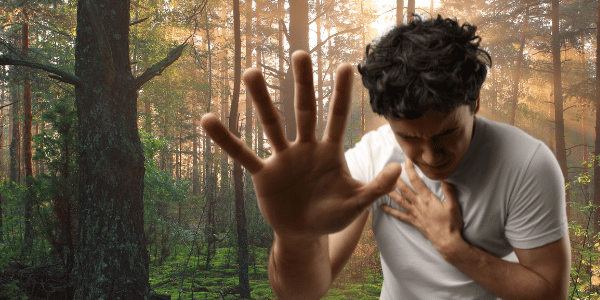
There's a specific kind of terror that only someone who's experienced a panic attack really understands. The sudden surge in the chest. The racing heart that feels like it might not stop. The tunnel of thought that says something's about to go horribly wrong. The dizziness, the shortness of breath, the sense of unreality. And for many people, the equally difficult afterward, when you're left drained, shaken, and worried about when the next one will arrive.
If you've been living with panic attacks, please know two things right up front. You aren't going crazy. And you aren't stuck with this. Panic attacks are one of the most workable expressions of nervous system dysregulation, and herbal medicine has a remarkable and often underappreciated role to play in easing them, both in the acute moments and in the deeper healing that keeps them from returning.
In my clinical herbal practice in Salt Lake City, panic is one of the concerns I work with often. I want to walk you through what's actually happening in your body during a panic attack, why the plants are so uniquely suited to this kind of care, and how a thoughtful herbal approach can meet you both in the middle of an episode and in the longer arc of genuine recovery.
What a Panic Attack Actually Is
Let's start with what a panic attack really is at the physiological level, because understanding this changes everything about how you approach it.
A panic attack is a full activation of your sympathetic nervous system with no external threat present. Your body's fight-or-flight response, which was designed to help you escape a predator or fight for your life, has fired at maximum intensity in a moment when there's nothing actually chasing you. Your heart races because your body's preparing to run. Your breathing changes because your body's flooding oxygen to your muscles. Your chest tightens, your skin cools, your vision narrows, and your thoughts scatter, because every system in your body has been called to emergency status.
None of this means you're broken. Every one of these responses would be exactly right if you were actually in danger. The issue isn't that your body's doing something wrong. The issue is that the alarm system's firing when it doesn't need to, and it's firing so intensely that your body and mind are overwhelmed.
Here's the truly important part. Panic attacks aren't random events. They arise from a nervous system that's been dysregulated for a while. The alarm system's become sensitized, hyperactive, and quick to fire. This usually happens as the result of chronic stress, unmetabolized experiences, sleep deprivation, sustained pressure, and the cumulative wear of modern life on a system that was never meant to run this hot for this long.
This is the deepest insight I can offer you. Panic isn't the disease. Panic is a symptom of a nervous system that's been asking for help for a long time and hasn't been heard. And this is exactly where herbal medicine, done well, does its most transformative work. Not by suppressing the alarm, but by gradually restoring the nervous system to a state where the alarm no longer needs to fire so easily.
Why Herbal Medicine Reaches the Root
Most conventional approaches to panic attacks focus on the acute moment. Interrupt the panic. Suppress the symptom. Get through the episode. These approaches have their place, and I don't dismiss them. In an acute crisis, immediate relief matters.
But there's a limitation to any approach that only meets the acute moment. It doesn't change the underlying nervous system state that keeps producing the panic in the first place. You feel better during the episode, and then next week another episode arrives, because nothing has actually shifted at the deeper level.
Herbal medicine works differently. In the hands of a thoughtful practitioner, herbs aren't just about calming the alarm in the moment. They're about steadily restoring the whole system that's producing the alarm. Certain plants, taken consistently over weeks and months, help the nervous system rebuild its natural regulation. They ease the chronic activation that's been keeping the alarm sensitive. They rebuild the physical reserves that stress has drawn down. They support deeper sleep and steadier daily rhythms. They gradually change the baseline your nervous system's operating from.
Over time, this changes the picture entirely. The panic attacks become less frequent because your system's less primed to produce them. When they do arise, they're less intense, and they resolve more quickly. Eventually, for many people, they stop being a regular part of life at all.
This root-level work is what makes personalized clinical herbal care so powerful for panic. We're not trying to override your body. We're supporting it in remembering how to regulate itself. That's slow, cumulative, and deeply real, and it's what produces the durable relief that many people have stopped believing is possible.
Meeting Panic as It Arrives with Herbs
Alongside the deeper foundational work, herbs also have a genuine role to play in the acute moments. This is where personalized herbal support really shines for people living with panic.
Certain plants, taken as tinctures or teas, can gently ease an active panic attack. They don't shut down the response the way a sedative would. They don't leave you groggy, disoriented, or unable to function afterward. What they do is soften the intensity of the acute experience, help your heart rate settle, support your breath in returning to a natural rhythm, and give your body just enough regulation to move through the episode with more capacity.
For many of my clients, this changes their relationship with panic entirely. Instead of being afraid of the next attack, they carry a small tincture bottle and know they have real support when they need it. The fear of the fear, which is so much of what keeps panic going, begins to soften. And that softening itself reduces the frequency of episodes.
This kind of in-the-moment herbal support is also invaluable during challenging and panic-inducing events. Before a difficult conversation. Before a flight. Before a doctor's appointment or an important meeting. Before a family gathering that always leaves you keyed up. Before entering a crowded space if that's a trigger for you. A small dose of well-chosen herbal support ahead of time can meaningfully change how your nervous system meets the event, and can prevent the escalation into full panic.
The point isn't to numb yourself. It's to give your body the support it needs to stay regulated enough that you can be present. That's what herbal medicine offers that pharmaceuticals often don't. Presence with support, rather than suppression.
A Safe and Effective Path, Sometimes as Effective as Pharmaceuticals
I want to say something clearly, because it matters for people considering their options.
Herbal medicine is not a lesser or softer alternative to pharmaceutical care for panic. In many cases, when it's used thoughtfully with an experienced practitioner, it can be genuinely as effective as pharmaceutical interventions, and often without the side effects that keep so many people from continuing their medication.
The research on this has grown substantially in recent years. Several well-designed clinical trials have shown that specific standardized herbal preparations can produce reductions in anxiety and panic symptoms comparable to commonly prescribed pharmaceuticals, with dramatically better side effect profiles. This isn't fringe research. It's published in respected medical journals, and it's being taken seriously by integrative practitioners across the world.
For many people, this changes the conversation entirely. If you've been avoiding pharmaceutical care because of concerns about dependence, cognitive dulling, sexual side effects, weight changes, or the difficulty of tapering off later, herbal medicine offers a genuinely viable path that avoids most of these concerns. If you've tried pharmaceuticals and found them helpful but troubling to be on long-term, herbal medicine can often work alongside a physician-supervised taper toward reducing or eventually discontinuing them.
I want to be very clear about something here. I never suggest anyone change or discontinue their medications on their own, and I don't work outside my scope. If you're on medication for panic or anxiety and considering changes, that conversation belongs with your physician. What I can offer is thoughtful herbal support that works alongside your medical care, easing side effects, supporting the deeper healing, and giving you a broader base of resources for the long term.
For people who've never tried pharmaceuticals and prefer to explore natural options first, herbal medicine's a genuinely reasonable and often highly effective starting point. It's safe, it works with the body rather than against it, and when done well it produces real and lasting change.
Why Personalized Herbalism Care Matters So Much
One of the most important truths in this work is that the right herbs for one person's panic are often not the right herbs for another person's. This is especially true with the nervous system, where individual constitution and pattern matter enormously.
Two people can be describing what looks like the same panic pattern, and the herbs that genuinely serve each of them may be entirely different. A calming herb that's beautiful for one nervous system can actually aggravate another. A warming, moving plant that helps one person can be too stimulating for someone whose system's already running hot. This is why picking a popular remedy off a shelf rarely produces the results people are hoping for, especially with something as sensitive as panic.
Personalized clinical herbal care changes this entirely. In a session together, we look at your specific constitution, your specific pattern of panic, your triggers, your sleep, your history, your stress landscape, and your particular experience of what a panic attack feels like in your body. From that whole picture, a custom formula's built specifically for you. It evolves as you evolve, and the herbs we choose are the ones that'll actually meet your specific nervous system where it is.
For panic in particular, this personalization matters even more than usual, because the stakes of getting it wrong are higher. A poorly matched herb won't just fail to help. It can sometimes make things worse. Working with a qualified clinical herbalist is what ensures that the plants supporting you are genuinely the right ones for your body.
If you've been living with panic attacks and you're curious whether personalized herbal support could help, an initial consultation is a warm and unhurried place to begin. We'll look at your specific pattern together, explore both foundational and in-the-moment support, and build something that meets you exactly where you are. Whenever you feel ready, you're welcome to reach out.
A Deeply Regulating, Nourishing, and Centering Connection
There's something I want to name that often gets missed in the conversation about herbal medicine for panic, because it goes beyond symptom management into something more profound.
Working with plants isn't just about the biochemistry, though the biochemistry's real. It's also about the relational and ritual dimensions of the work. A daily cup of a calming herbal tea, taken slowly with intention, is a small daily meeting with the living world. A tincture carried in your pocket becomes a physical anchor of care you can reach for when you need it. A carefully compounded formula, made specifically for you, becomes a physical expression of being seen and supported.
These aren't small things. For a nervous system that's been in survival mode for a long time, the felt experience of being cared for is itself deeply regulating. The plants become allies. The daily ritual becomes a container. The practice of pausing to sip a tea, breathe with an aromatic, or take a dropper of tincture becomes a form of returning to yourself, moment by moment, day by day.
For people living with panic, this deeper dimension of the work is often what changes everything. It's not just that the symptoms ease. It's that the person begins to develop a different relationship with their own body, their own experience, and their own capacity to meet difficulty. The plants teach a slower, gentler, more present way of being. And that way of being is itself the medicine.
This is what I mean when I speak of herbal medicine as a nourishing, centering connection to wellness. It's not just what the plants do to your body. It's what the relationship with them does to your life.
What Recovery Actually Looks Like
I want to offer you an honest and hopeful picture of what recovery from panic actually looks like when this work's done well, because so many people living with panic have stopped believing that real recovery's possible.
In the first few weeks of a thoughtful herbal plan, the acute intensity of panic often begins to soften first. The episodes may still arrive, but many people report that they feel a little less overwhelming, a little easier to move through, a little less frightening in retrospect. You're not free of them yet, but they're not the same beast they were.
Over the following months, as the deeper foundational work does its slow rebuilding, the frequency starts to change. Weeks can pass between episodes where before there might have been one every few days. Sleep improves, which itself dramatically reduces panic frequency. Energy returns. Baseline anxiety begins to ease. The tools you've been learning start to work in real time. You catch yourself in an early activation and know how to soften it. You use your acute herbal support and feel it help.
By six months of consistent work, many clients describe a fundamentally different relationship with panic. Not necessarily the total absence of it, though many people do reach that. But a genuine sense that panic no longer runs their life. That they aren't afraid of it in the same way. That they can travel, socialize, work, and live without the constant background worry of when the next episode will come. That version of you is real, and it's available.
This is what the plants and the practices can do together, over time, with the guidance of a practitioner who knows how to hold this work. It's genuinely worth every step toward it.
When to Seek More Support
I want to include something important, because these patterns can sometimes intensify to a place where they need more urgent care.
Panic attacks that come with thoughts of self-harm, that feel like a genuine medical emergency you can't tell apart from something serious, or that are severely limiting your daily life deserve prompt professional support. Please speak with a physician or mental health provider, and please call or text 988 to reach the 988 Suicide and Crisis Lifeline if you're in crisis. This is free, confidential, and available 24 hours a day, and it connects you with trained counselors who can offer immediate support.
Herbal medicine's a meaningful support and a beautiful companion to other forms of care, but it's not a substitute for the professional relationships that can carry you through the hardest moments. A thoughtful path often includes more than one kind of support working together, and I'll always name that clearly when it's the right guidance for you.
Panic doesn't have to be a permanent feature of your life. With thoughtful herbal support, both in the acute moments and in the deeper foundational work, real change is available. The plants have accompanied human beings through terror and difficulty for as long as we've kept records. They're ready to help you too.
If you're ready to explore what personalized herbal care could look like for the panic you've been living with, I'd be honored to walk part of this path with you. An initial consultation's a calm and unhurried place to begin. There's no pressure. Only the offer of care that's built for the person you actually are.