How Herbal Medicine Complements Mental Health Therapy · A Clinical Herbalist's View From Salt Lake City
An exploration of combining herbal medicine with the extraordinary work of therapy, and how the nervous system heals best when it is supported from more than one direction
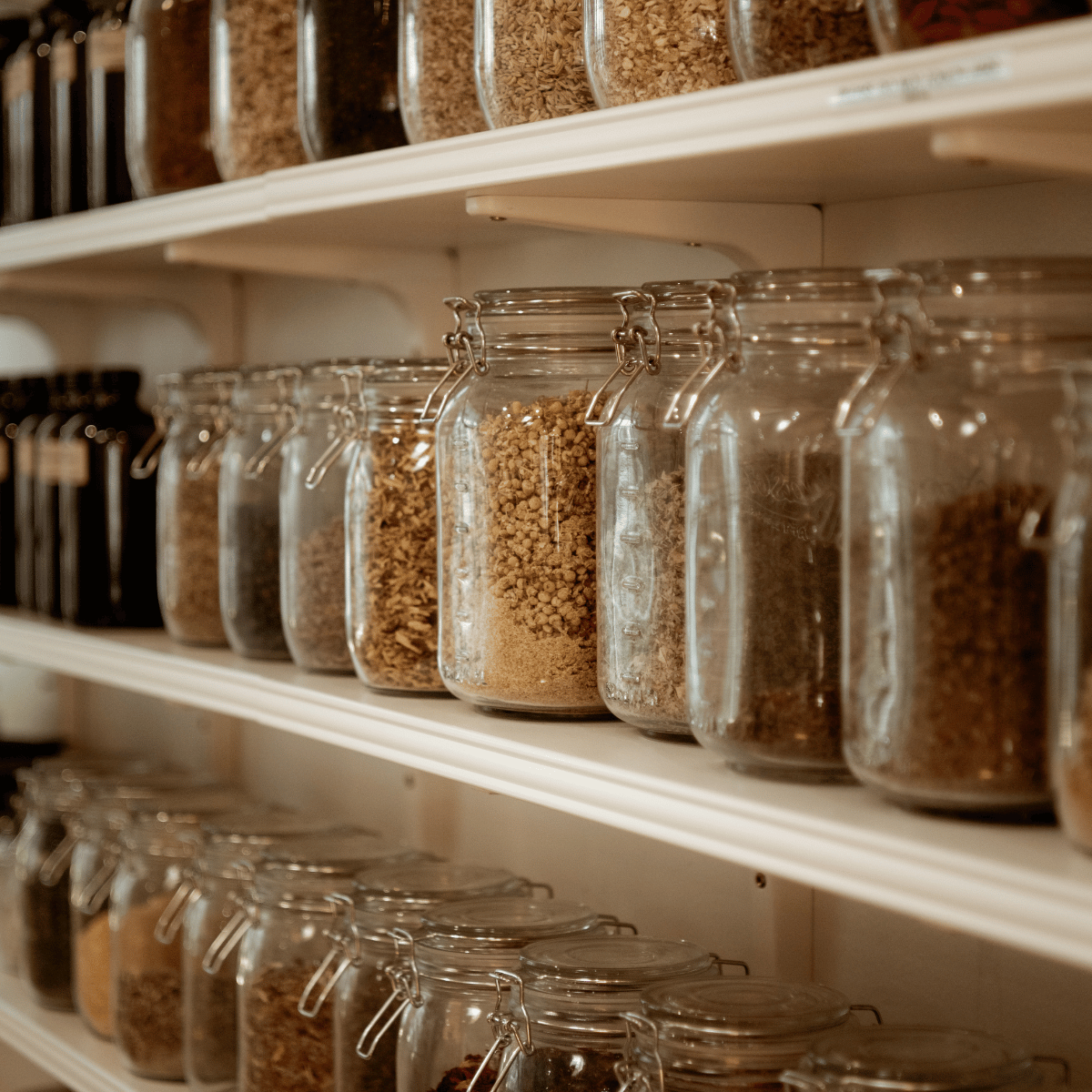
Our herbal apothecary in downtown Salt Lake City, Utah is stocked with herbal allies that support healthier body, mind, emotions, and spirit
Some of the most transformative healing I have witnessed in my years of clinical herbal practice in Salt Lake City has happened for clients who are also actively working with a mental health therapist. This is not a coincidence. Therapy and herbal medicine work on the same person, on the same nervous system, in genuinely complementary ways, and when the two are held in an intentional collaboration, the results often go deeper than either could achieve alone.
I want to be clear from the start about something that shapes everything else in this post. I hold mental health therapy in the highest regard. I refer to therapists often. I see an amazing therapist every week. I encourage clients to seek professional therapeutic support whenever it is the right fit. I have watched therapy change my life and the lives of others in ways that nothing else could have. This post is not about herbal medicine as an alternative to therapy… it’s about herbal medicine as kin to it, one that softens the body enough to receive the deeper work that therapy offers.
Let me walk you through what that actually looks like…
The Nervous System Is Doing the Work in Both Rooms
To understand how these two forms of care support each other, it helps to understand what they share at the deepest level. Both are doing their most important work in and through the nervous system.
Therapy, in almost all its evidence-based forms, is helping the nervous system learn new patterns. It is teaching the body that old threats are no longer present. It is reshaping the automatic responses that stress and trauma have built up. It is creating the internal safety that allows growth, insight, and integration to take root.
Herbal medicine, in the hands of a thoughtful clinical practitioner, is helping that same nervous system settle, rebuild, and become more receptive. The plants ease chronic activation and chronic deferment. They restore the physical reserves that stress has drawn down. They help the body come out of survival mode and into the state where healing is genuinely possible.
When both are present, the nervous system has more support than either alone can offer. The therapy work becomes more accessible because the body is no longer in constant fight or flight. The herbal work goes deeper because the client is also actively unwinding the patterns from the top down. The two grow together in a way that is quietly powerful.
Meeting the Major Therapy Modalities With Herbal Support
Each of the modern evidence-based therapies works in a slightly different way, and herbal medicine can meet each of them from a different angle. Let me walk through several of the most common approaches I see my clients working with here in Salt Lake City…
Cognitive Behavioral Therapy (CBT)
Cognitive Behavioral Therapy is one of the most widely practiced therapeutic modalities, and for good reason. It offers structured, evidence-based tools for identifying unhelpful thought patterns, examining them honestly, and shifting the behaviors that grow out of them. It is genuinely effective, and I have deep respect for the therapists doing this work well.
Herbal medicine complements CBT beautifully in one specific way. CBT asks the client to bring cognitive attention to their patterns, which is difficult when the nervous system is exhausted or activated. A depleted, anxious body can only hold so much reflective work before the capacity for insight runs out. Herbal support that steadies the nervous system between sessions makes the reflective work of CBT more accessible and more sustainable, especially during difficult stretches.
I often support my clients during this therapy by providing a tea blend they can take to therapy sessions and sip on to get the full support of the plants.
Dialectical Behavior Therapy (DBT)
Dialectical Behavior Therapy grew out of CBT and has become the gold standard for many people navigating intense emotions, difficulty with regulation, and patterns that feel overwhelming to manage in the moment. Its core skills, mindfulness, distress tolerance, emotion regulation, and interpersonal effectiveness, are life-changing for many people.
Where herbal medicine tends to support DBT clients most is in the underlying capacity for regulation itself. DBT skills work best when the nervous system has some reserve to draw on. If a person is so depleted that every interaction pushes them past their window of tolerance, the skills are harder to apply. Herbal support that gently rebuilds the depleted nervous system, alongside the skills work of DBT, tends to make the tools more usable in real life, and the growth more durable.
I often work with aromatic, uplifting, and gently moving herbs to support folks doing DBT in the form of teas, tinctures, and even gentle essential oil formulations.
Acceptance and Commitment Therapy (ACT)
Acceptance and Commitment Therapy is one of the more recent developments in the therapy world, and it is one I have particular appreciation for. Rather than trying to change difficult thoughts and feelings, ACT invites clients to make space for them while committing to values-based action. It is philosophically warm and psychologically effective.
Herbal medicine and ACT share a similar spirit. Both understand that the goal is not to eliminate difficult experience but to support the person's capacity to be with it. Nervine and adaptogenic herbal support builds the physical steadiness that makes acceptance more embodied and less abstract. When the body has more felt sense of safety, the willingness to sit with difficulty grows naturally.
I love supporting those doing ACT with nourishing, grounding, and replenishing formulas they can work with daily to resource their bodies and minds.
EMDR
Eye Movement Desensitization and Reprocessing has become one of the most powerful tools available for working with trauma, and it has helped many of my clients move through experiences that had previously felt frozen or unspeakable. I refer to EMDR therapists regularly, and the transformation I have seen in clients who commit to this work is extraordinary.
EMDR is intense work. It brings the nervous system into contact with material that has been held for a long time, and the days and weeks between sessions can carry significant activation, fatigue, and emotional weight. This is exactly where thoughtful herbal support tends to be most meaningful. Between-session support that helps the nervous system settle, sleep, and rebuild allows the client to enter the next session with more resilience. Many EMDR therapists welcome this kind of collaborative support because they see how it makes the therapeutic work more sustainable.
Exposure and Response Prevention
Exposure-based therapies, including Exposure and Response Prevention for OCD and various forms of anxiety, ask the client to deliberately move toward what they fear, in a structured and titrated way, so that the nervous system can learn that the feared experience is survivable. It is one of the most demanding forms of therapy, and one of the most effective when it is done well.
The bravery this work asks for is real, and the nervous system carries the cost. Herbal support during a course of exposure work tends to help in two ways. It steadies the baseline anxiety that would otherwise interfere with the exposures themselves. And it supports the rest and recovery that the nervous system needs between exposures, so that the client's overall capacity is not drained by the process. This is another modality where I encourage clients to stay closely connected with their therapist and to think of the herbal work as background support for the deeper therapeutic labor.
If you are currently working with a therapist, or considering it, and you are curious whether herbal medicine might support the process, an initial consultation is a warm and unhurried conversation. There is no pressure and no expectation, only the offer to explore whether this kind of care could serve you. Your therapist's work stays central, and herbal medicine sits alongside it.
Schedule an Initial Consultation
What Herbal Medicine Adds That Therapy Was Not Designed to Do
Therapy is powerful. It is also focused on the psychological, emotional, and behavioral dimensions of healing. It was not designed to address the physiology of the nervous system directly, and most therapists would say the same thing openly.
This is where herbal medicine sits in a place of genuine kinship to therapy. The plants work directly with the whole body and all its many levels and layers. They ease the tension in the chest that the anxious client cannot talk their way out of. They support the sleep that no amount of insight can command. They rebuild the depleted adrenals that no reframing can reach. They quiet the inflammation that stress has stoked over years. And they steady the daily physical experience of being in the body, which makes the therapeutic work more accessible and more integrated.
None of this replaces what therapy does. It supports and completes it. A client who is doing brave work in the therapy room and taking a thoughtfully chosen herbal formula between sessions is bringing more of themselves to both. That is why the results can go so much deeper than either alone.
What This Actually Looks Like For Real
When I work with clients who are also in therapy, the collaboration is usually informal but genuine. A typical experience might look like this…
The client comes in for an initial herbal consultation and mentions they are in weekly therapy. I ask about the modality, how it is going, and what patterns they are working on. This helps me shape the herbal approach to align with, rather than complicate, the therapeutic work.
We build a custom herbal formula, along with a simple daily practice such as a tea ritual, breathwork, yoga nidra, or affirmation… all supporting the nervous system between therapy sessions. I ask permission for any communication with the therapist if it seems useful, though most of the time no formal communication is needed. The two forms of care work in parallel, held together by the client at the center in a way that feels good to them and makes sense for their own wellness goals.
Over time, we adjust the herbal work in response to what is emerging in therapy. If EMDR is stirring up disrupted sleep, we adjust the evening formula. If a difficult period of exposure work is depleting the client, we shift toward more building and restorative herbs. The herbal care is responsive, and it is designed to serve the deeper work rather than compete with it.
When Therapy Is the Priority, Herbal Medicine Can Wait
I want to be honest about something too. There are times when someone comes to me curious about herbal support, and after our first conversation, my genuine advice is to prioritize therapy first, get grounded there, and then consider whether herbal support has a role to play once the therapeutic container is established. This is especially true for acute mental health situations, trauma processing that is just beginning, or moments of crisis. Herbal medicine is a beautiful support, but it is not a substitute for the skilled professional relationship that a therapist provides, and I will always name that openly if it is the right guidance.
The larger point is that this is not a competition between forms of care. It is a partnership, and the client at the center gets to decide, with good information and unhurried conversation, what shape their support looks like. Sometimes that includes both. Sometimes it starts with one and adds the other later. Both paths are honorable, and both are welcome here.
For the Therapists Reading This
If you are a mental health therapist reading this and you have clients whose progress feels stuck because of the physical weight they are carrying, herbal medicine may be worth considering as a collaborative support in their care. Chronic stress physiology, sleep disruption, anxiety in the body, and the deep depletion that shows up as flatness and fatigue often respond meaningfully to thoughtful, individualized herbal support. And that support may help your therapeutic work reach places it could not otherwise reach.
I welcome collaborative relationships with local therapists and am always happy to discuss how herbal care might support the work you are doing with a specific client. Your work is central, and my role is to be a steady support beside it. I am always eager to meet new providers, learn from one another, and make connections in support of our communities. Reach out and let’s have tea!
If you are working through something meaningful with a therapist and you are ready to add another layer of support to your care, or if you are just curious about what personalized herbal medicine might feel like alongside the deeper work you are already doing, I would be glad to meet you. An initial consultation is a calm, unhurried conversation about your whole picture, and it can help clarify whether herbal support is right for you.