
How Herbalism Works
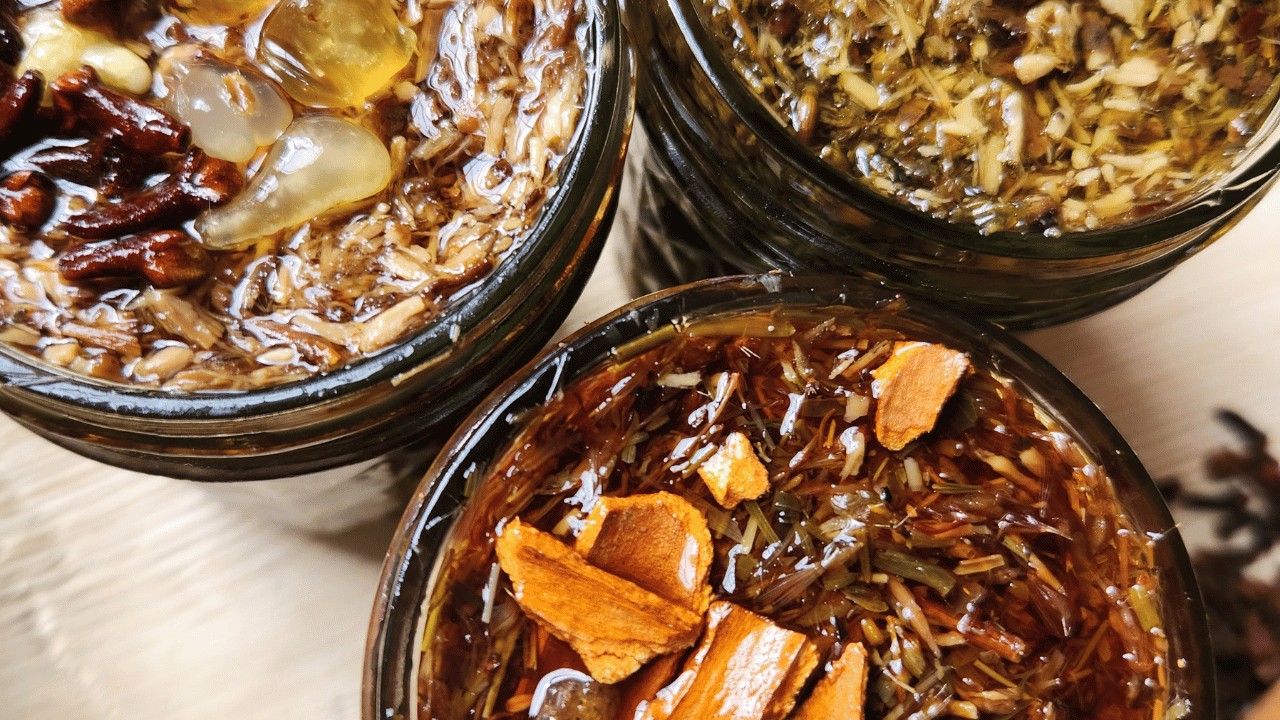
Herbal medicine is one of the oldest healing systems on earth. Long before laboratories and pharmacies, human beings learned to tend their health through a relationship with the plant world- a relationship built on observation, experience, and a deep trust in the body's capacity to heal when it is properly supported. That tradition is alive. And it is more relevant to the way most of us are suffering right now than almost anything else available to us.
Medicine for the way modern life actually affects the body
Most of the people who come to see me are not dealing with one isolated problem. They are dealing with a cluster of experiences that have crept up over months or years: the anxiety that won't fully turn off, the sleep that doesn't restore, the energy that used to be reliable but isn't anymore, the mood that feels more fragile than it once did, the pain that conventional medicine hasn't been able to explain or resolve.
What looks like several separate issues is very often one thing- a nervous system and stress-response ecology that has been pushed past its limits for too long. Chronic stress is not just a psychological experience. It is a whole-body event. When the stress response remains activated over time, it disrupts sleep architecture, elevates inflammation, lowers pain thresholds, destabilizes mood, depletes the adrenal system, and pulls the whole ecology of health out of balance.
Herbal medicine is uniquely suited to address this kind of complex, layered disruption; not by suppressing symptoms, but by supporting the body's own intelligence in finding its way back to balance. The plants I work with most have been used for exactly this purpose for centuries. They know this territory. And when they are matched carefully to the specific person in front of me, they work.
Clinical and spiritual · two dimensions of the same medicine
I practice what I think of as clinical herbalism with a spiritual heart. These two dimensions are not in tension- they deepen each other.
The clinical dimension means that my approach is grounded in the science of plant medicine: the pharmacology of herbal constituents, the physiology of the stress response, the evidence base for the herbs I use most. Every formula I compound is informed by this knowledge. I am not guessing. I am applying decades of study to the specific pattern of the specific person in front of me.
The spiritual dimension means that I also hold something the clinical picture alone cannot capture: that plants are not merely chemical delivery systems. They are living beings with their own intelligence, their own relationships with the human nervous system, and their own way of meeting a person where they are. When I introduce a client to Lemon Balm, known for centuries as the herb of the heart, I am not just offering a mild anxiolytic. I am beginning a relationship between that person and a plant ally that may accompany them for years.
Both dimensions are present in every session. The science guides the formulation. The spirit guides the encounter.
The five layers I explore with every client
Chronic stress does not live in one place. It lives across the whole person… in the body, the mind, the spirit, the energy, and the story of someone's life. My intake process is built around five layers of exploration, because the picture of what's actually happening rarely emerges from questions about symptoms alone.
Body · Where does stress live physically? What are the patterns of tension, pain, digestive disruption, or immune vulnerability? What does the body's constitution tell us about which herbs will work best?
Mind · What is the quality of the mental and emotional experience? Is the anxiety generalized and hovering, or acute and panic-driven? Are there worry loops, intrusive thoughts, mood instability, or a sense of emotional flatness?
Spirit · What is the relationship with meaning, with nature, with a sense of belonging to something larger? Grief, disconnection, and the absence of purpose show up in the body as stress- and they respond to herbal medicine differently than other stressors.
Energy · What is the pattern of vitality through the day? Is this a tired-and-wired nervous system or a crashed-and-depleted one? How is sleep; onset, maintenance, quality, and the feeling upon waking? The answers here point directly to the stage of adrenal function and which herbs the body most needs.
Story · What has been happening in this person's life, and for how long? Old grief, longstanding pressure, relational stressors, and the accumulated weight of years of coping… these are not separate from the clinical picture. They are the clinical picture.
The intake itself is therapeutic. Many clients tell me they have never been asked these questions in a health context before. Being heard across all five layers and having the whole ecology of your experience taken seriously is the beginning of the healing, not a preliminary to it.
Custom herbal formulas, made for you in our apothecary
One of the things that distinguishes clinical herbalism from picking supplements off a shelf is the formulation process. I do not prescribe generic herbal products. I compound custom formulas specifically for each client, for where they are in their healing right now.
After the intake, I synthesize everything I've heard into a clinical picture: the pattern of your stress ecology, which body systems are most under pressure, whether your nervous system needs calming or building or both, what stage of depletion or activation your adrenal system is in. From that picture, I select the herbs that most precisely meet your current needs.
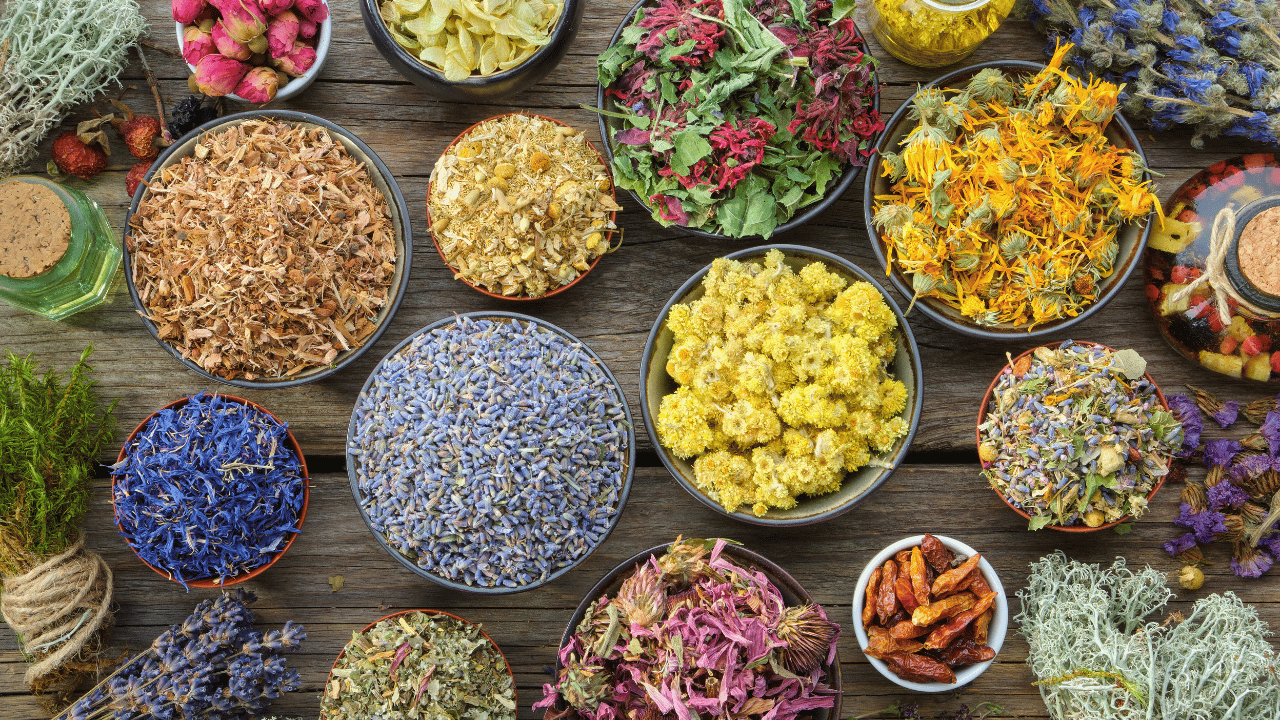
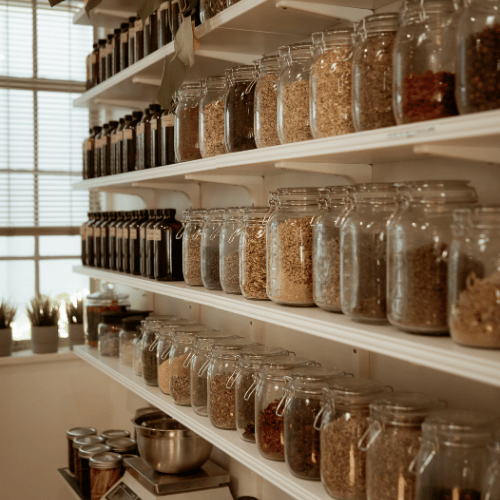
Then, whenever possible, we make the medicine together. The apothecary at Flow Acupuncture is where this happens. You will hold and smell the herbs before they go into your formula. I will tell you the story of each one… where it comes from, what traditions have used it, why it belongs in your blend specifically. You will understand your medicine before you take it home, because understanding it is part of how it works.
Your custom formula might be a tincture blend, a tea, an herbal honey, or a combination of preparations depending on your pattern and your lifestyle. It will be formulated to address both the immediate experience (the anxiety, the sleeplessness, the fatigue) and the deeper root (the depleted foundation that needs rebuilding over time).
Three ways we work together
My clinical sessions are structured in three forms, each designed for a different moment in the healing arc.
The Initial Consultation is where we begin. This is a deep, unhurried session, up to ninety minutes, in which I take the full five-layer intake, develop a clinical picture with you, introduce you to the herbs that will form your first formula, and compound your remedy at the apothecary. You leave with your custom medicine, a practice to begin at home, and a clear sense of what we are working toward together and why.
The Follow-Up Session is where the living work of herbal healing happens. We review what has shifted since your last visit across all five layers, refine your formula based on your body's response, deepen the practice layer, and continue the conversation with the plant world. Most clients working through chronic stress will benefit most from monthly follow-ups for the first three to six months, with sessions spaced further apart as resilience builds.
The Remedy Refill is a brief, practical visit, ten to fifteen minutes in our apothecary, to replenish your custom formula without a full clinical session. Bring your bottles. Herb costs are additional and vary by formula.
Most clients experience meaningful shifts within the first two to four weeks: sleep begins to change at the edges, the sharpest moments of anxiety soften, energy becomes slightly more reliable. The deeper rebuilding, the kind that changes your baseline relationship with stress, takes longer. I generally recommend thinking of this work in a four-to-six-month arc, with the understanding that the plants are working cumulatively and that real resilience is built slowly, the way roots grow.
What you can expect from the work
Herbal medicine is not a quick fix. It is not designed to suppress symptoms so that you can continue pushing through. It is designed to restore the conditions in which your body and nervous system can genuinely heal, and that takes the time it takes.
What most clients notice, in roughly this order: something shifts in sleep first, even slightly. Then a softening at the sharpest edges of anxiety or mood reactivity. Then, over weeks and months, a more consistent energy and a greater capacity to recover after stress. By the time we reach the resilience phase of the work, usually months three through six, many clients describe a fundamentally different relationship with stress itself. Not its absence, but a changed response to it. The old baseline has become a memory.
The plants do this work. Your daily practice: the tea, the consistency, the small rituals- they hold the space for the plants to work. And the sessions hold the space for all of it: the clinical precision, the plant relationships, and the whole-person perspective that chronic stress demands.
If this sounds like the kind of care you have been looking for, I would be glad to meet you.