HRV and HeartMath in the Herbal Clinic · Nervous System Recovery for Stress, Anxiety, Fatigue, and Fog
How I use heart rate variability assessment and HeartMath coherence practice to deepen my clinical herbal work and produce faster, more profound results, from a certified HeartMath practitioner and clinical herbalist in Salt Lake City
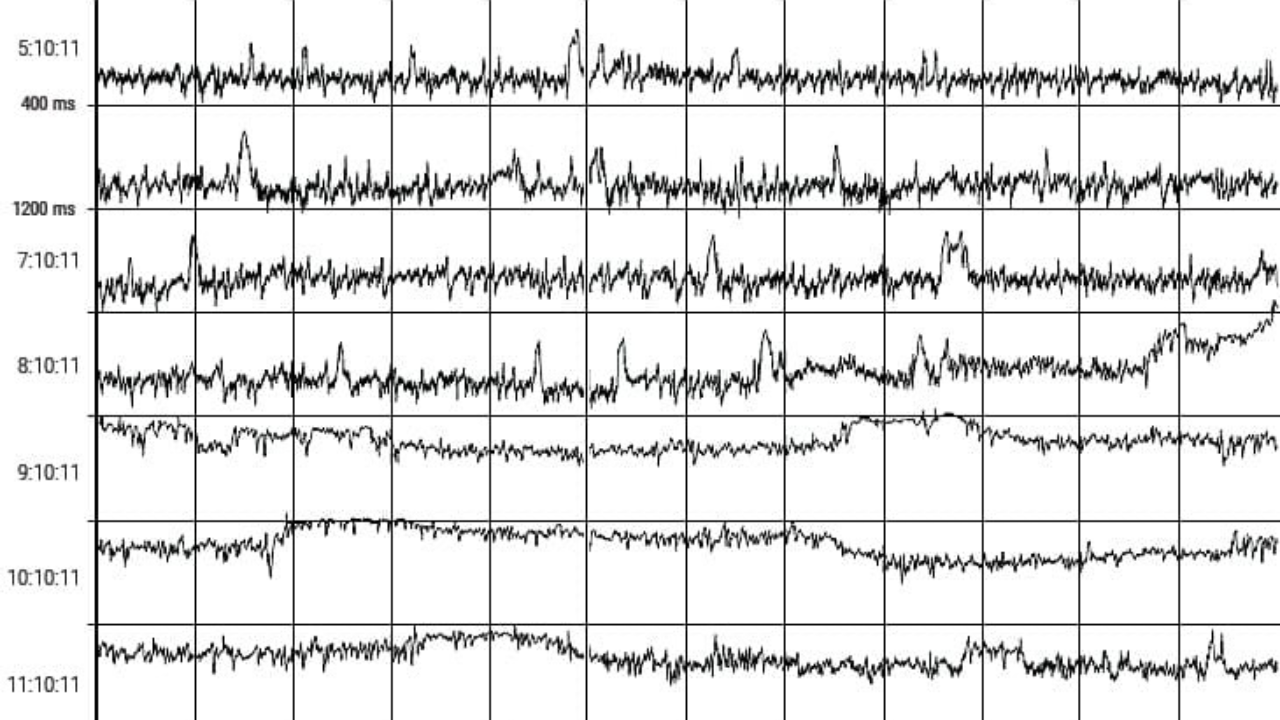
Example of a Heart Rate Variability reading in our herbal clinic in Salt Lake City, Utah
If you’ve been navigating chronic stress, anxiety, burnout, or the specific fog that comes from a nervous system running past its limits, I want to introduce you to one of the most powerful tools I bring into my clinical herbal practice here in Salt Lake City. It’s called heart rate variability, or HRV for short, and alongside the ancient wisdom of herbal medicine, it’s one of the clearest windows modern science has given us into how our nervous systems are really doing.
Pair HRV assessment with HeartMath, a well-established and research-backed system for training nervous system coherence, and you have a genuinely remarkable combination. One that lets us see your nervous system state with real clarity, work with it in grounded and measurable ways, and track your progress across weeks and months with the kind of precision that transforms vague recovery into tangible, confirmed healing.
I’ve completed HeartMath’s Clinical Certification Program, and I weave both HRV monitoring and HeartMath practices into my clinical herbal work on a regular basis. The combination of personalized herbal medicine, HRV-informed assessment, and HeartMath coherence training offers something that none of these three alone can provide. Faster results. Deeper regulation. And measurable confirmation that your nervous system’s actually rebuilding, which matters enormously when the recovery arc is long and the daily felt experience can be hard to trust.
Let me walk you through how it all works together.
What HRV Actually Is, in Plain Language
Heart rate variability is the subtle timing difference between each of your heartbeats. Your heart beats at a steady pace overall, but the exact gap between beats is always changing in small ways. These tiny variations might seem random, but they aren’t. They’re a signal of how well your nervous system is adapting, regulating, and responding to your life.
Here’s the key piece. Higher HRV means a more flexible, resilient nervous system. One that can meet stress and recover from it. Lower HRV means a nervous system stuck in chronic activation, running too hot for too long, with less capacity to down-regulate into rest.
HRV is produced by the constant interplay of two branches of your autonomic nervous system. The sympathetic branch is your activation system, the gas pedal. The parasympathetic branch is your calming and recovery system, the brake. When these two branches are working in healthy balance, your heart’s rhythm reflects that flexibility, and HRV is high. When sympathetic activation dominates for too long, parasympathetic tone diminishes, and HRV drops.
Chronic stress drops HRV significantly. Months and years of ongoing activation train the nervous system into a less flexible, less resilient state. The result is the familiar landscape of chronic stress. The wired-and-tired body. The anxious baseline that won’t settle. The sleep that doesn’t restore. The energy that collapses when you most need it. The brain fog that makes clear thinking feel impossible. All of these are reflections of a nervous system that’s lost its natural flexibility.
The hopeful part is that HRV is remarkably responsive to the right interventions. Breath practices improve it. Sleep improves it. Meditation improves it. Time in nature improves it. And thoughtfully personalized herbal medicine, matched to your specific pattern and taken consistently, improves it meaningfully over weeks and months.
This is what makes HRV such a powerful ally in clinical work. It gives us a measurable, trackable view of what’s actually happening in your nervous system, which lets us build and refine your care with real precision rather than relying only on how you’re feeling day to day.
Why HRV Matters So Much for Stress, Anxiety, Fatigue, and Brain Fog
Each of the main patterns I see in my clinical practice has a direct relationship to HRV, and understanding this changes everything about how we can approach recovery.
Chronic stress
When stress runs long, HRV drops. The nervous system loses the capacity to shift between activation and recovery. You start living in a state of chronic low-grade activation that never fully resolves. Rebuilding HRV is one of the most direct ways to rebuild the resilience that chronic stress has worn down.
Anxiety
Low HRV is strongly associated with anxiety, panic, and generalized nervous system reactivity. When the autonomic system has lost flexibility, small triggers produce disproportionately large responses. The threshold at which anxiety fires drops. As HRV improves, this threshold rises, and the whole experience of anxiety begins to soften.
Burnout and fatigue
The deep tiredness of burnout reflects, in large part, a nervous system that’s lost its ability to produce sustainable energy. Low HRV correlates with the specific pattern of running on empty, where mornings are hard, afternoons collapse, and evenings leave you wired-and-tired. Restoring HRV restores the body’s capacity to actually generate steady energy again.
Brain fog
The cognitive fog of chronic stress has a measurable physiological basis. When the autonomic nervous system is dysregulated, blood flow to the prefrontal cortex (the brain region responsible for clear thinking, focus, and executive function) is reduced. Working memory suffers. Decision-making feels impossibly hard. Thinking becomes slower and heavier. As HRV improves, this cognitive clarity returns, often more quickly than people expect.
For anyone navigating any of these patterns, HRV isn’t just a nice metric. It’s a direct reflection of the physiological reality underneath your felt experience. When we work to improve HRV through herbal medicine, HeartMath coherence practice, and daily nervous system support, we’re working directly on the biological foundation of your recovery.

How I Use HRV Assessment in the Clinic
This is where I want to share something specific about my practice, because it genuinely sets apart the kind of work I’m able to offer clients.
In my clinical herbal practice at Flow Acupuncture and Apothecary in Salt Lake City, I use HRV monitoring as a regular part of my assessment and ongoing care. Not every session, and not for every client. But often enough that it’s become a meaningful dimension of the deeper clinical work.
Here’s what that looks like in practice.
At the initial consultation, HRV data gives me a measurable baseline of where your nervous system is actually sitting underneath your reported symptoms. Sometimes a client comes in describing moderate stress, and the HRV data reveals a significantly more depleted state than they’d realized. Other times, a client who’s convinced they’re falling apart has more baseline capacity than they’d given themselves credit for. Either way, having real data lets us build your care from an accurate starting point rather than guessing.
During the formulation process, HRV insights help me clarify energetics and herbal matching in ways that go beyond what questions alone can reveal. Traditional herbal assessment relies on gathering a wide range of signals about your body, your pattern, and your constitution. HRV data adds another layer of clarity. It helps me see with more precision whether your system most needs cooling or warming support, whether we should emphasize restoring versus moving plants, whether your parasympathetic branch needs direct support or whether your sympathetic activation needs easing first. This precision translates into more effective formulas, matched more exactly to your specific nervous system state.
Across follow-up sessions, HRV becomes one of the most valuable tools for tracking the efficacy of your custom formula over time. We can see, in real data, whether the herbs are producing the nervous system shifts we’re aiming for. If HRV is improving in the pattern we expected, we know the formula is landing. If it’s not shifting, or shifting in an unexpected direction, we have early signal that the formula may need adjustment, long before you might have noticed the issue through felt experience alone. This lets us refine and improve your care faster and more precisely than I could if I were relying only on how you report feeling week to week.
For long-term care arcs, HRV data gives you and me a shared, objective view of your progress. The felt experience of nervous system recovery is often subtle and hard to trust, especially early on. HRV data confirms what’s really happening. Many of my clients find enormous value in being able to see their HRV trend upward over months of consistent care, because it validates the invisible work the herbs and practices are doing and sustains their commitment to the arc.
This is why I describe the integration of HRV monitoring with personalized clinical herbal care as transformative. It takes work that would otherwise unfold in subjective felt experience and gives it a measurable, verifiable, trackable dimension. The result, consistently, is faster progress and deeper confirmation. You know you’re healing, because you can see it.
HeartMath: Research-Backed Coherence Training for the Nervous System
Alongside HRV monitoring, I’m proud to be a certified HeartMath practitioner. I’ve completed HeartMath’s Clinical Certification Program, and the techniques, protocols, and tools from this remarkable organization are woven into my clinical herbal work in ways that produce real, measurable results for my clients.
Let me tell you briefly about HeartMath, because it’s one of the most important bodies of research and practice to emerge in the field of nervous system science over the past three decades.
HeartMath is a research institute and training organization that has spent more than thirty years studying the relationship between heart rhythms, emotional states, and brain function. Their core discovery is that the heart doesn’t just respond to the nervous system. It actively influences it. When the heart beats in a smooth, coherent rhythm, the entire autonomic nervous system follows. The brain functions better. Stress hormones decrease. Blood pressure stabilizes. Immune function improves. Mental clarity returns. And perhaps most importantly, the subjective felt experience shifts from reactivity and overwhelm toward calm, clarity, and capacity.
HeartMath has developed specific, simple, research-validated practices that help people shift their nervous system into this coherent state at will. The techniques are elegant in their simplicity. They involve focused breathing, intentional emotional engagement with positive feelings, and a gentle redirection of attention to the heart itself. With practice, these techniques can produce measurable shifts in HRV within minutes.
For my clients navigating chronic stress, anxiety, burnout, and brain fog, HeartMath coherence practice is genuinely life-changing when woven alongside personalized herbal medicine. The herbs do the slow, cumulative work of rebuilding nervous system reserves and shifting baseline physiology. The HeartMath practice gives my clients an immediate, moment-to-moment tool they can use any time their system needs regulation. The combination is dramatically more powerful than either approach alone.
Having completed HeartMath’s Clinical Certification Program means I’m trained to use their validated tools, protocols, and biofeedback technology in a clinical context. I can teach you the practices in a way that produces reliable results. I can measure your coherence through HRV biofeedback in real time. And I can integrate this training into your personalized herbal care so that the plants and the practices work together to produce the fastest, most durable results possible.
How Heart Rate Variability Monitors Work in the Clinic
For anyone curious about what HRV monitoring actually looks like in a clinical setting, let me demystify it a bit.
HRV monitoring is non-invasive, painless, and quick. In the clinic, I use a professional HRV sensor that attaches gently to the earlobe or finger. The sensor reads the subtle timing variations between your heartbeats and feeds the data into software that produces real-time visualizations of your nervous system state. You can see, in the moment, whether your system is in a coherent, regulated state or whether it’s running in sympathetic overdrive.
For many clients, seeing this data for the first time is a revelation. They can watch their HRV shift as they take a few deep breaths. They can see the direct, immediate effect of a HeartMath coherence practice on their nervous system. They can watch their heart rhythm transform from chaotic to coherent in real time. For people who’ve been living with chronic stress for years and have lost touch with what regulation feels like, this visual feedback is often profoundly motivating. It makes the invisible visible.
Beyond in-clinic sessions, I often recommend home HRV monitoring for clients who want to track their progress and deepen their practice between sessions. Several excellent wearable devices (such as the Oura ring, the Whoop band, Apple Watch, and Garmin devices) now offer reliable HRV tracking. For clients who use these, we can look at trends over weeks and months to see how your nervous system is responding to the full picture of your care. The combination of in-clinic assessment and daily home tracking gives us a remarkably complete view of your recovery.
For clients who prefer not to use wearable technology, that’s completely fine. The clinical HRV assessments during sessions give us plenty of data to work with, and the HeartMath practices can be learned and sustained without any ongoing monitoring. The tools are there for people who want them. The core clinical work doesn’t depend on them.
How I Teach HRV-Regulating Practices to Clients
One of the most valuable things I do with clients is teach them simple, powerful, research-backed practices that improve HRV and shift the nervous system toward regulation. These become daily tools they can use for the rest of their lives, independent of any formula or clinic visit.
Among the practices I teach regularly:
HeartMath coherence techniques
The core HeartMath practices (Quick Coherence, Heart-Focused Breathing, and others) can be learned in minutes and used anywhere. They produce measurable HRV improvements within a few minutes of practice, and with consistency, they rebuild baseline HRV over weeks and months. I teach these techniques directly in sessions, often with real-time HRV biofeedback so clients can see the effect of their practice.
Extended exhale breathing
The simplest and most reliable HRV-boosting practice available. Breathing with exhales longer than inhales directly activates the parasympathetic nervous system and raises HRV almost immediately. Even a few minutes a day of this practice can meaningfully shift baseline nervous system state over time.
Resonance breathing
Breathing at approximately 5 to 6 breaths per minute (which varies slightly by individual) produces maximum HRV improvement in most people. This specific breath rhythm is one of the most research-validated HRV practices in the field, and I teach it as a cornerstone practice for many clients.
Herbal tea ritual as nervous system practice
The daily tea ritual, especially when done slowly and intentionally with HeartMath-informed attention, becomes a powerful nervous system regulating practice. The combination of warmth, aromatic engagement, sensory presence, and herbal medicine, held within the structure of a coherent breath and heart focus, produces reliable HRV improvement over time.
Nature connection practices
Time outdoors, particularly with intentional attention to sensory presence, meaningfully improves HRV. We’re fortunate along the Wasatch Front to have extraordinary access to this medicine, and I weave specific outdoor practices into client care wherever appropriate.
Embodied presence practices
Simple body scanning, interoceptive awareness practice, and other embodied presence techniques improve HRV by rebuilding the nervous system’s capacity to notice and regulate its own state.
The point of teaching these practices isn’t to overwhelm clients with new homework. It’s to give you a small, sustainable set of tools that integrate seamlessly into your daily life and produce real, measurable nervous system shifts over time. Combined with your personalized herbal care, these practices multiply what the plants can do on their own.
Why This Integrated Approach Produces Faster, More Profound Results
I want to speak directly to why combining personalized herbal medicine with HRV monitoring and HeartMath coherence training produces results that none of these approaches alone can match.
The herbs do the deep, cumulative work.
Personalized clinical herbal medicine, chosen specifically for your pattern and taken consistently, gradually restores the depleted reserves of your nervous system, eases chronic sympathetic activation, supports deeper sleep, and rebuilds the physiological foundation of resilience. This is slow, cumulative, profoundly real work. It takes weeks and months, but it changes everything.
HRV monitoring makes the invisible visible.
With HRV data, we can see what the herbs and practices are doing in your nervous system in real time and across months. We can confirm that the formula is landing. We can refine the plan with precision. We can validate your progress with real evidence, which sustains your commitment through the long arc of recovery.
HeartMath coherence practice provides immediate tools.
While the herbs do their slow work in the background, HeartMath gives you something you can use right now, in any moment, to shift your nervous system state. This is especially valuable in the early stages of care, when baseline HRV is still low and acute moments of stress or anxiety are still common. Having a research-backed practice you can use at will is deeply empowering.
All three dimensions reinforce each other.
The herbs make the HeartMath practice work more deeply, because a nourished nervous system responds more readily to coherence training. The HeartMath practice supports the herbs, because improved coherence enhances absorption, digestion, and overall physiological function. And HRV monitoring confirms the progress of both, keeping us focused on what’s working and quickly identifying what needs refinement.
The combined effect, which I’ve watched produce consistently excellent results in clients over the years, is faster progress, deeper transformation, and more sustainable recovery than any single approach can offer. This is why I feel so passionate about offering this integrated model. It represents the best of ancient herbal wisdom married to the best of modern nervous system science, and the people it serves genuinely thrive.
HeartMath in Salt Lake City
Life along the Wasatch Front carries its own particular landscape of stress on the nervous system. High altitude physical demands. Dramatic seasonal shifts from smoky summers to inversion-heavy winters. The pace of a growing metropolitan area. The pressures of modern professional and family life. All of these create real conditions for the kind of nervous system depletion that drops HRV and generates chronic stress, anxiety, burnout, and brain fog.
My clinical herbal practice in Salt Lake City is designed to meet the actual life you’re living in this actual place. The combination of personalized herbal care, HRV-informed clinical assessment, and HeartMath coherence training is uniquely suited to the particular stress load that life here can create. Your care is built to fit the real conditions you’re navigating, not designed for someone in a different place with a different life.
For anyone searching for natural remedies for stress, natural support for anxiety, holistic approaches to burnout recovery, or nervous system regulation and brain fog care here in Salt Lake City, this integrated model offers something genuinely different.
What Healing Looks Like
Let me give you an honest and hopeful picture of what the arc of recovery looks like when personalized herbal medicine, HRV monitoring, and HeartMath coherence practice are woven together.
In the first few weeks, the HeartMath practice begins producing in-the-moment nervous system shifts you can feel and often see on HRV monitoring. Acute moments of stress or anxiety become easier to meet. The herbs begin their slow background work. Sleep often starts improving within the first two to four weeks, which is itself one of the most important HRV-boosting changes available.
Over the following months, baseline HRV begins to climb. Mornings become more accessible. Energy becomes more sustainable. The brain fog that had been constant begins to lift. Anxiety eases in a durable way, not just in acute moments but in your overall baseline. The felt sense of being able to meet your life grows substantially. HRV data, both from clinic sessions and home tracking if you’re using it, confirms the shift.
By six months of consistent, integrated care, many clients describe a fundamentally different relationship with their nervous system. Baseline HRV is often significantly higher than when they began. The patterns of chronic stress, anxiety, burnout, and brain fog have softened or substantially resolved. The herbs and practices have become part of their life, not as homework but as support they genuinely enjoy and rely on.
This is real, and it’s measurable, and it’s available. The combination of ancient herbal wisdom and modern nervous system science is one of the most powerful offerings available to anyone navigating chronic stress and its many expressions.
If you’ve been living with chronic stress, anxiety, burnout, or brain fog, and you’re ready to explore an integrated approach that combines personalized herbal medicine with HRV-informed clinical assessment and HeartMath coherence training, I’d be honored to walk this path with you. An initial consultation is a calm and unhurried place to begin. There’s no pressure. Only the offer of care that reflects the real depth of what traditional clinical herbal medicine, combined with modern nervous system science, has to offer.
Your nervous system wants to recover. The plants are patient, powerful allies. And the science of HRV and HeartMath coherence training can make your recovery visible, measurable, and faster than you’d imagined possible.